
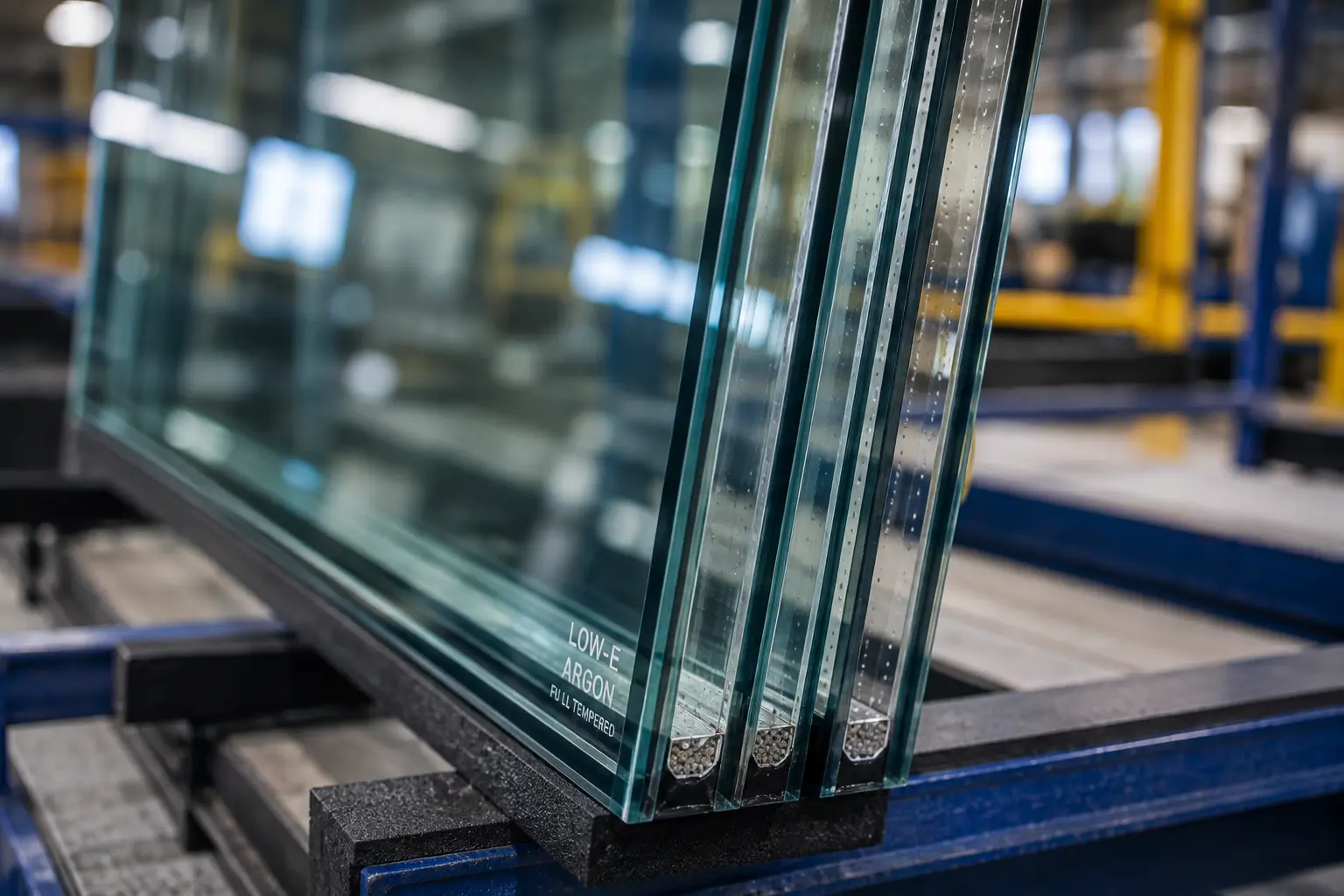
Vitro Architectural Glass has commercialized the first low-e coating that derives its warm, champagne aesthetic from the coating itself rather than a tinted substrate — delivering 45% VLT and 0.24 SHGC without forcing architects to choose between color and thermal performance. Here's what the coating-first approach means for façade specs.
A Coating That's Also the Color
For decades, architects chasing a warm, earth-toned façade have had to accept a trade-off: specify a tinted substrate — bronze, gray, or a similar body-tinted glass — and lose some solar-control flexibility, or specify a high-performance low-e on clear glass and give up the warm aesthetic. Vitro Architectural Glass has just eliminated that binary choice.
Vitro Architectural Glass, North America's leading architectural glass manufacturer, announced the launch of Solarban Champane, a crisp, warm-toned low-e glass. The product achieves its distinctive color through a breakthrough low-e coating technology, an industry first. Unlike tinted glass, the champagne tones are produced by the coating itself, which delivers a warm-neutral appearance with the trusted and proven energy efficiency of Solarban solar control, low-e glass.
The implication for spec sheets is significant. Solarban Champane derives its distinctive champagne-toned appearance directly from the low-e coating, marking an industry first in coating-based color development. The result is a warm-neutral, low-reflective exterior appearance that aligns with contemporary architectural palettes dominated by soft stone, metal, and earth tones. The visual effect remains crisp and controlled, avoiding excessive mirror-like reflectivity while maintaining façade clarity and uniformity across elevations.
The Performance Numbers That Matter to Specifiers
Aesthetic breakthroughs mean little without performance data. Here's what Vitro is publishing:
- In a standard insulating glass unit configuration with clear glass, the product delivers a visible light transmittance (VLT) of 45% and a solar heat gain coefficient (SHGC) of 0.24, supporting energy-efficient envelope design and compliance with modern sustainability targets.
- The coating can be applied on clear glass and low-iron substrates: Starphire Ultra-Clear glass and Acuity glass by Vitro, and select tinted options, including Optigray glass and Solarbronze glass.
- For large-scale façade applications, the glass can be supplied in oversized dimensions up to 130 × 204 inches, with availability extending to Titan glass sizes of 130 × 240 inches.
A 0.24 SHGC paired with 45% VLT keeps the glazing in the range required by ASHRAE 90.1 and progressive state energy codes for most orientations without a body-tint penalty, and the oversized Titan availability means the coating is a candidate for the unitized curtain wall and window-wall systems now dominating mid- and high-rise commercial construction.
Why the Coating-First Approach Changes the Design Conversation
The traditional path to a warm-tone façade — bronze or amber-tinted substrates — imposes real constraints. Body tints absorb rather than reflect solar energy, driving up edge stresses, complicating thermal-stress analysis, and often narrowing available performance permutations. Coating-derived color sidesteps most of that.
Vitro's R&D team focused on manipulating the application of magnetron-sputtered vacuum deposition (MSVD) coatings with the goal of producing a warm-toned glass option. Vitro brought Solarban Champane low-e glass to market. The champagne-colored glass delivers that warm neutral with subtle reflectivity and the same thermal performance levels that the Solarban line is known for.
For architects, that means the same glass can be specified across multiple project types — office, multifamily, hospitality — without re-running SHGC and U-factor calculations every time a designer wants to adjust the substrate. For glazing contractors and fabricators, it means fewer SKUs and a simpler supply chain when jobs mix substrates within a single façade.
Supply Chain and Domestic Sourcing
There's a procurement story here too. Manufactured exclusively at Vitro's Wichita Falls, Texas facility, Solarban Champane is available on clear glass and low-iron substrates, including Starphire Ultra-Clear and Acuity glass by Vitro. With tariff pressure elevated on imported coated glass and lead times for European specialty products still stretched, a domestically manufactured, ship-direct coated product on Titan sizes is a meaningful de-risking option for GCs and glazing subs working on tight commercial schedules.
Practical Implications for the Building Industry
- Architects: A warm-neutral appearance is now available without the reflectivity and body-tint compromises that used to force a choice between aesthetic and performance. Expect Solarban Champane to show up in early-stage material boards for adaptive reuse, boutique hospitality, and mid-rise multifamily where soft palettes dominate.
- Building envelope consultants: Because the aesthetic is coating-driven, thermal-stress and edge-deletion protocols follow standard Solarban practice rather than requiring the tinted-substrate analysis architects historically relied on for warm-tone façades.
- Glazing contractors and fabricators: Coating flexibility across clear, low-iron, and select tinted substrates simplifies inventory strategy and allows a single coated product to serve multiple design intents on the same jobsite.
- Manufacturers of curtain wall, storefront, and window-wall systems: Titan-size availability means Solarban Champane is compatible with the largest unitized panel formats currently being specified — no size-driven substitutions required.
The broader signal: coating chemistry, not substrate chemistry, is increasingly where façade color innovation will happen. Expect competitors to follow.