
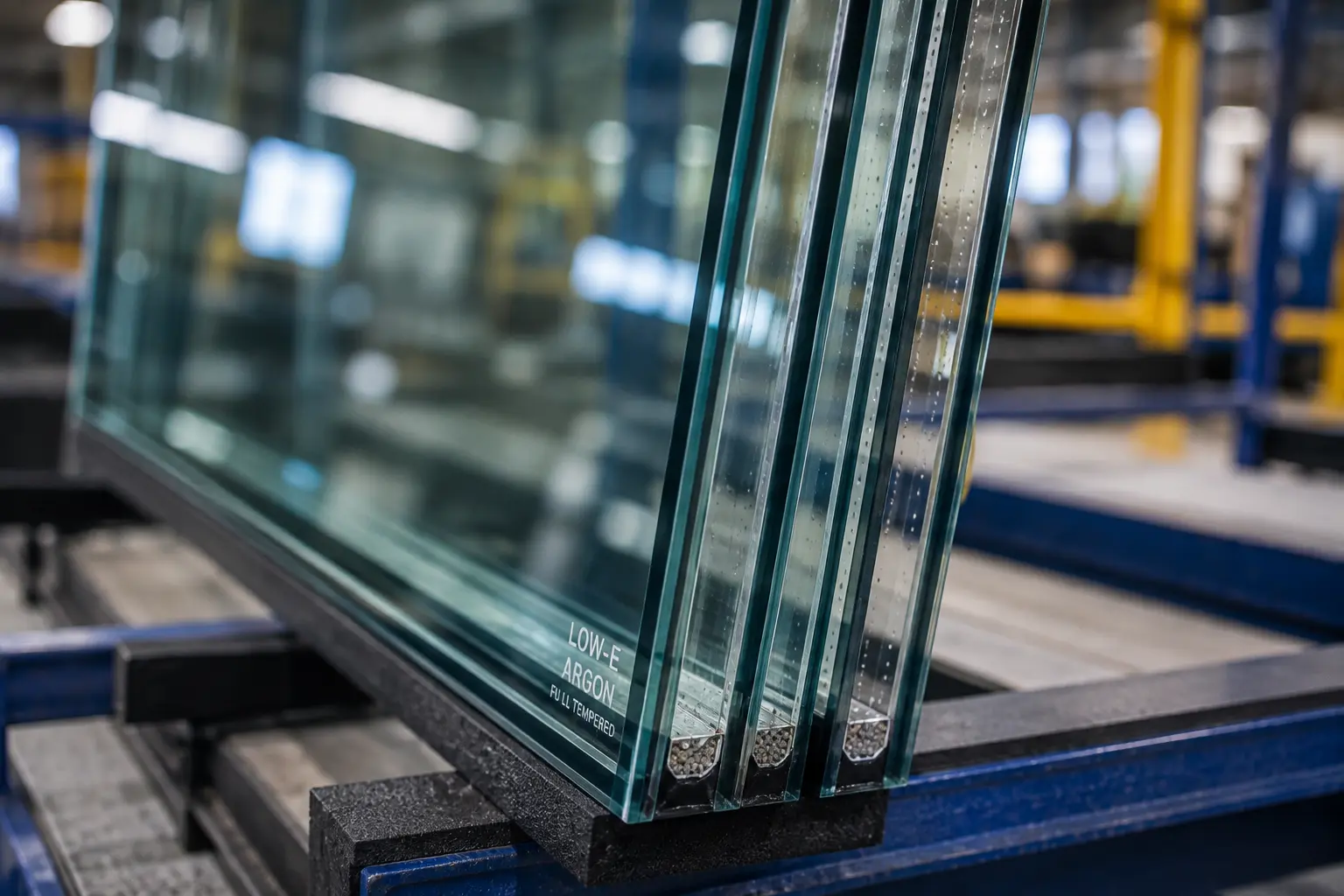
Vitro Flat Glass has terminated its architectural glass licensing agreements with China's Jinjing and its affiliates, ending authorization to use Vitro's MSVD-coated glass technology and the Solarban and Starphire trademarks. The move puts a new verification burden on architects, specifiers, and glazing contractors sourcing coated glass through global supply chains.
A Decade-Long Technology Partnership Ends
On October 27, 2026, Vitro Architectural Glass went public with a notice that will ripple through specifier offices, glazing shops, and procurement teams on both sides of the Pacific. Vitro Flat Glass LLC has terminated its architectural glass licensing agreements with Jinjing and its affiliates since January 2025, ending the authorization to use Vitro's architectural MSVD-coated glass, as well as the Solarban and Starphire trademarks.
The implications are blunt. Jinjing and its affiliates are currently not authorized to manufacture, market, sell or distribute architectural glass using these proprietary technologies or to represent their products as Solarban glass, Starphire glass, Vitro-licensed or PPG-licensed glass. That covers two of the most frequently specified brand families in North American commercial glazing — Solarban low-E coatings and Starphire low-iron glass — and the magnetron sputter vacuum deposition (MSVD) coating technology that underpins them.
Why This Matters Beyond a Trademark Dispute
Solarban and Starphire are not generic descriptors. They appear by name on thousands of curtain wall, storefront, and window wall spec sheets across the U.S. and Canada, often tied to specific solar heat gain, visible light transmittance, and aesthetic values locked into energy models and daylighting studies. When those brand names show up on submittals or shop drawings sourced from offshore fabricators, the project team needs to know the glass is actually what the specification calls for.
Vitro is making that verification responsibility explicit. Vitro asks customers, architects, specifiers, fabricators, glazing contractors and other industry partners to report any Jinjing product marketed as Solarban glass, Starphire glass or as authorized by Vitro or PPG.
What Changes on the Project
The termination narrows the authorized global supply footprint for Vitro-branded coated glass and raises the stakes on provenance documentation. Practical implications for the design and construction team:
- Submittal review: Confirm that any Solarban or Starphire glass on a project traces back to a Vitro-authorized float line and coater. Jinjing-sourced product carrying those names is no longer legitimate under the licensing arrangement.
- Fabricator certifications: Insulating glass fabricators and laminators that previously drew on Jinjing-coated substrates for North American or export projects will need to re-source. Confirm the coated lite origin on IGU certification paperwork.
- Warranty exposure: This announcement does not affect Vitro's warranty obligations for products supplied by Vitro. By implication, product marketed as Vitro-licensed that was not actually supplied by Vitro carries no Vitro warranty — a material issue for curtain wall and window wall warranties that pass through the glass warranty.
- Energy modeling consistency: Projects that modeled specific Solarban SHGC and U-value performance should verify the installed coating is from an authorized source. Jinjing-made coatings using the terminated MSVD process cannot be assumed to deliver identical optical and thermal performance.
The Automotive Carve-Out
The split is not total. Vitro's architectural licensing termination is separate from the companies' continuing relationship involving automotive coating technologies, which may remain in effect in accordance with its terms and is not affected by this announcement. That distinction matters for anyone trying to parse the broader Vitro-Jinjing relationship, but it has no bearing on building envelope specifications.
A Broader Signal on IP in the Global Glass Supply Chain
The timing is notable. The architectural glass industry has spent the last several years consolidating — Apollo's take-private of NSG/Pilkington, OBE's agency expansion, and a wave of fabricator M&A — and simultaneously globalizing its coated-glass sourcing. Vitro's move signals that the major Western coating developers intend to defend MSVD intellectual property and brand equity aggressively, even against long-standing licensees.
Vitro remains committed to honouring its valid commercial obligations while vigorously protecting its intellectual property, trademarks, technologies and customers worldwide.
Action Items for Specifiers and GCs
- Flag any open projects where Solarban or Starphire glass is specified and the fabricator supply chain touches Jinjing or its affiliates.
- Add a submittal clause requiring documentation of coated-lite origin for all Vitro-branded products.
- Brief estimating teams on the risk of accepting pricing from suppliers quoting Jinjing-coated Solarban or Starphire — those offers are no longer legitimate.
- Coordinate with Vitro's regional commercial team to confirm authorized supply chains for projects shipping in 2027 and beyond.
The Jinjing termination doesn't change what Solarban or Starphire glass is. It changes who can legitimately claim to make it — and that is now a specification-level question, not just a procurement one.