
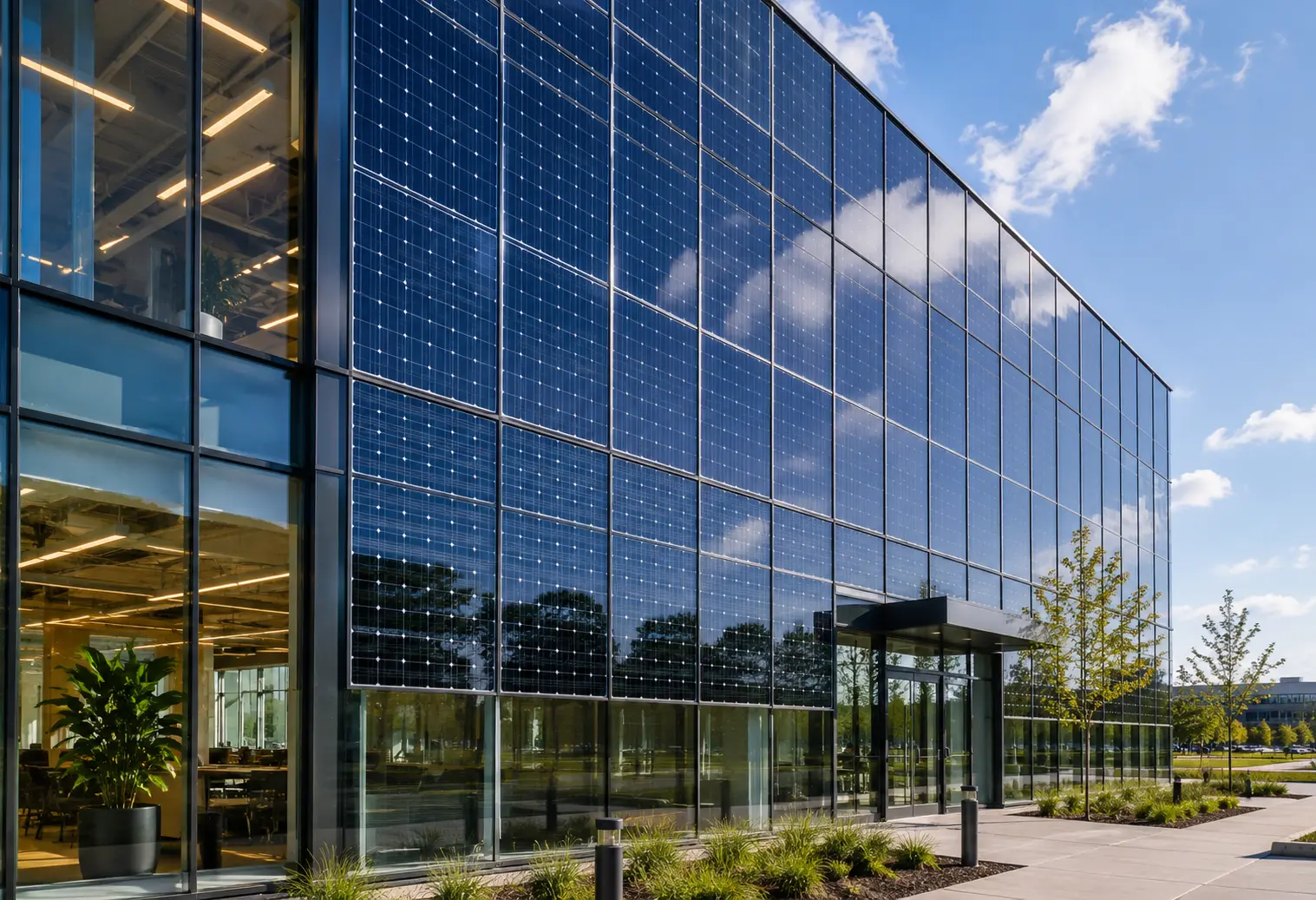
Vitro's decision to expand its film-free EcoArmor Protective Topcoat to Solarban 70 — its most widely specified low-e — puts a new sustainability and productivity story on the fabricator floor. Here's what the debut at GlassBuild America means for spec sheets, lead times, and IGU quality.
A Quiet Debut With Loud Implications
On September 22, during the opening of GlassBuild America in Las Vegas, Vitro Architectural Glass announced that EcoArmor Protective Topcoat is now available on Solarban 70 glass, expanding access to the company's film-free glass protection technology beyond its previous availability on Solarban 90. On paper, this looks like a simple line extension. In practice, it puts one of the most heavily specified solar control low-e coatings in the North American commercial market — Solarban 70 — on a fabrication pathway that eliminates a decades-old handling step.
For architects, glazing contractors, and IGU fabricators watching the coating-protection space, this is the moment the film-free approach graduates from niche to mainstream.
What EcoArmor Actually Is
EcoArmor is a full-surface protective coating applied at the float line to select Solarban low-e glasses. Unlike traditional temporary protective films, it delivers full surface protection without added waste, time-consuming removal steps or disposal costs — safeguarding the coating throughout transit, storage and fabrication.
The key mechanical difference: during tempering, the coating is removed by furnace heat, eliminating the need for traditional temporary protective films and the waste, labor and disposal requirements associated with them. It's essentially a sacrificial layer engineered to burn off cleanly rather than a plastic film that has to be peeled, collected, and hauled to a landfill.
And crucially for shop planners, EcoArmor is fully compatible with standard fabrication practices and can be processed using the same equipment already in place for coated glass, with no special handling requirements.
The Numbers Fabricators Care About
Vitro's launch data from Solarban 90 trials gives specifiers and fabricators a concrete performance envelope to evaluate. In real-world trials, EcoArmor Protective Topcoat has helped fabricators reduce tempering cycle times by 10–20%, minimize roll wave distortion and decrease edge kink by up to 33% on glass with pre-temper edge deletion.
That's a triple hit against the three chronic pain points of tempering coated architectural glass:
- Throughput. A 10–20% cycle-time reduction directly moves the bottleneck on any tempered-IGU line.
- Optical quality. Less roll wave means fewer field rejections on curtain wall and storefront glazing where reflection distortion is visible from grade.
- Edge integrity. A one-third reduction in edge kink on pre-temper edge-deleted glass matters especially for structural silicone glazing and warm-edge spacer applications where edge flatness drives seal reliability.
Why the Solarban 70 Extension Is the Bigger Story
Solarban 90 is a premium, high-VLT triple-silver product. Solarban 70 is a workhorse. It sits on countless mid- and high-rise office, healthcare, education, and civic projects across the U.S. Extending EcoArmor to Solarban 70 means the film-free supply chain is no longer a boutique option — it's now available on a coating that shows up on standard spec sheets nationwide.
Availability, however, comes with a channel constraint: EcoArmor Protective Topcoat is available exclusively through the Vitro Certified Network. Specifiers who want to write EcoArmor-equipped glass into a project should coordinate early with fabricators who are already in that network.
Practical Implications by Stakeholder
For architects and specifiers:
- The performance characteristics of Solarban 70 don't change. EcoArmor is a fabrication-side coating, not a spec change to VLT, SHGC, or U-factor. That means no rework on energy models.
- LEED and embodied-carbon-conscious projects gain a defensible waste-reduction story on the glass line item — eliminating single-use plastic films from the fabrication supply chain.
- Confirm your fabricator is Vitro Certified before writing EcoArmor into a submittal.
For glazing contractors and IGU fabricators:
- Expect measurable capacity gains on tempered-Solarban 70 orders without a capex event. The reported cycle-time savings free up furnace hours.
- Reduced roll wave and edge kink should translate to fewer field rejects and warranty callbacks — especially on SSG and butt-glazed applications.
- Standard cutting, seaming, and washing equipment stays in play.
For general contractors:
- Lead-time exposure on premium Solarban 70 orders should tighten as fabricators move volume through faster.
- The removal of a protective-film disposal step is a small but real jobsite-adjacent waste win worth flagging in sustainability reporting.
The Bigger Trend
EcoArmor's expansion signals that the architectural glass industry is finally attacking waste and inefficiency at the coating-protection layer — a step that has been the same for 30+ years. As Solarban 70 joins the film-free lineup and additional coatings follow, expect competitors to respond with their own film-elimination strategies. The plastic-wrapped glass lite may be on its way out.