
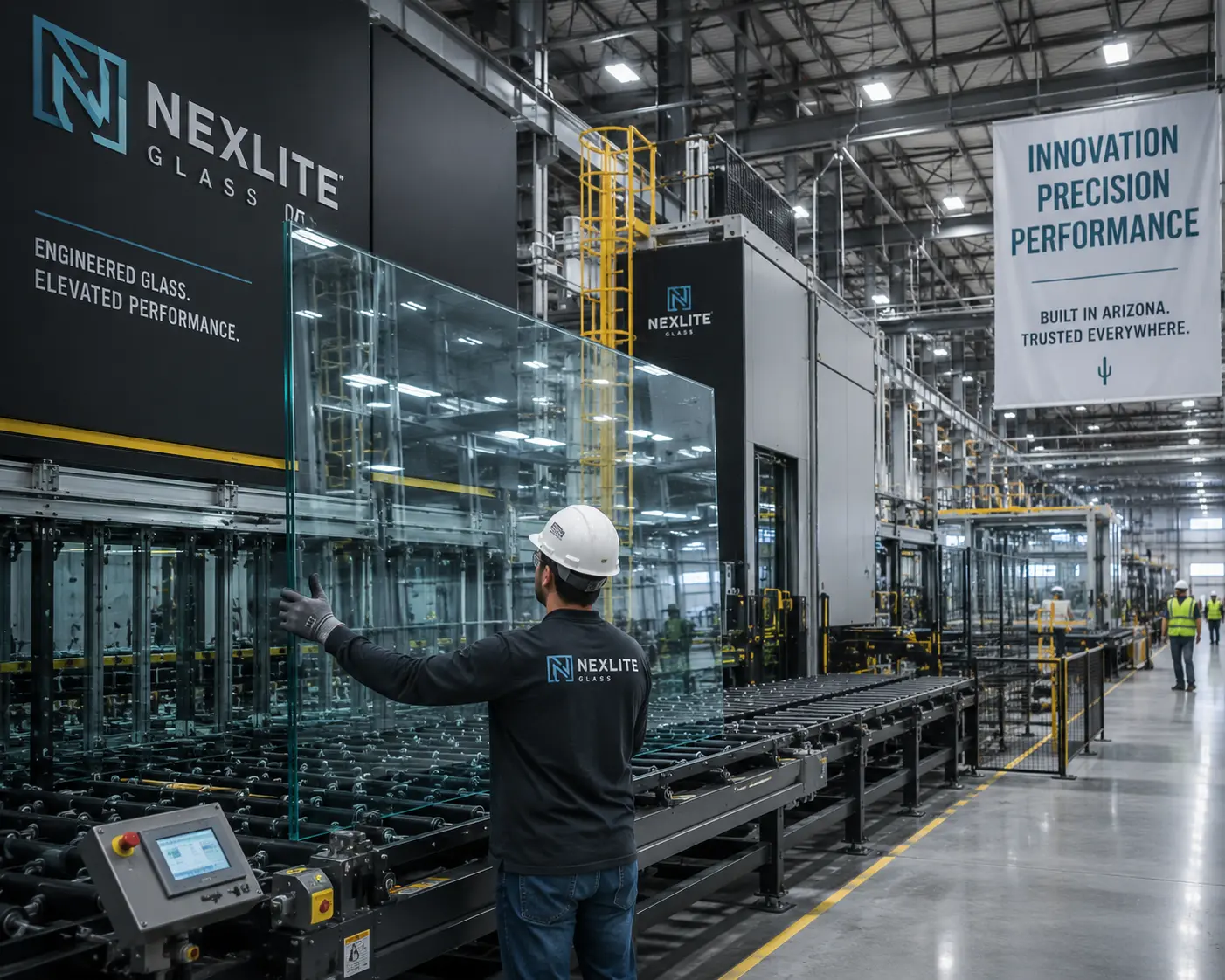
After 12 months of continuous production at the Barevka pilot plant, VOLTA has validated a 50% electrified, 88% cullet-fed flat glass process that slashes Scope 1+3 emissions by 71%. For architects tracking embodied carbon in glazing specs, the technology just moved from lab curiosity to industrial reality.
A Milestone for the Flat Glass Industry's Hardest Problem
Melting flat glass is one of the most emissions-intensive processes in the building products supply chain. It runs hot (1,500°C+), runs continuously, and has historically depended on natural gas. That's why the joint AGC–Saint-Gobain VOLTA pilot in Teplice, Czech Republic, matters: it just completed a full year of continuous operation, and the numbers are strong enough to make it a credible template for the next generation of float lines.
The VOLTA pilot furnace marks a decisive milestone in the demonstration of hybrid melting for flat glass, following one full year of continuous operation. Developed through a cooperation between AGC and Saint-Gobain and since its start-up in early 2025, the pilot furnace has delivered stable and consistent production, providing strong technological validation of the robustness of the hybrid concept.
Crucially, operational performance fully met design expectations, confirming energy consumption, temperature control and glass quality at the level of float glass across a wide range of cullet ratios and pull rates. These results strengthen confidence in the scalability of the concept and support its suitability for future industrial-scale deployment.
What the Hybrid Furnace Actually Does
VOLTA replaces the traditional all-gas melting process with a split architecture. The hybrid technology is 50% electrified with certified renewable sourcing, and 50% fired by a combination of oxygen and gas, allowing for a 71% reduction in Scope 1+3 CO₂ emissions (related to gas and raw materials only, according to Innovation Fund accounting).
The cullet story is just as important. The furnace also uses 88% of cullet in standard operation compared with 40% previously. These energy-efficient aspects also deliver a 66% reduction in fossil fuel consumption.
For context on why this matters at the industry level: the flat glass sector accounts for ~4.6 million tonnes of CO2 equivalent of direct emissions annually in Europe (~75% from natural gas combustion and ~25% from raw materials). Cutting the gas side and raising cullet content simultaneously attacks both halves of that emissions profile.
The Practical Implications for Specifiers
Embodied Carbon in EPDs Is About to Move
Environmental Product Declarations for architectural glass have been slowly improving, but the raw carbon intensity of float glass has been a floor that fabricators couldn't push below. If VOLTA-style hybrid furnaces scale, expect the reference values in the next round of EPDs from AGC, Saint-Gobain, and downstream fabricators to drop meaningfully. Spec writers chasing LEED v5 or CalGreen embodied-carbon thresholds will see easier compliance paths on the glazing line item.
Cullet Availability Becomes a Strategic Input
The jump from 40% to 88% cullet is a fundamental shift in supply chain logic. Glaziers, IGU fabricators, and construction waste handlers should expect closed-loop cullet programs to become a bigger commercial conversation—both as an offtake opportunity for demolition contractors and as a differentiator for fabricators who can guarantee recycled-content minimums in bid documents.
Grid Capacity Is the Next Bottleneck
The project isn't without friction. Securing permits and upgrading the plant's electrical infrastructure has proved to be a daunting task – one that is likely to intensify as this hybrid furnace technology scales up across larger sites throughout Europe. 'Revamping such a major plant to accommodate this type of technology is demanding on multiple fronts: budget, planning, and infra[structure].'
For North American developers watching this technology, the takeaway is that low-carbon float glass will follow the electric grid. Regions with clean, abundant, and permittable power will get the first hybrid lines. That's a supply-geography question that spec writers on large curtain wall packages should start factoring into risk assessments now.
The Scale-Up Math
VOLTA is a pilot, not a commercial line. But the technology's ceiling is significant. At the heart of the project lies a cutting-edge hybrid furnace designed to slash CO2 emissions by over 2 million tonnes annually when scaled up and deployed in Europe—roughly half of the flat glass sector's current direct emissions footprint.
Moving toward large-scale deployment will require substantial investment. The companies' focus for the next phase of development remains achieving an economically optimal balance between electricity and gas.
What to Watch Next
- First commercial line announcement. With a validated pilot, the next signal is a full-scale VOLTA-derived float line getting board approval at either AGC or Saint-Gobain. That's the point at which architects can start writing low-carbon float glass into bid packages with confidence in supply.
- Cullet contracts. Watch for glass fabricators locking in long-term recycled-content agreements with glaziers and IGU manufacturers.
- Competitive response. Guardian, Vitro, NSG/Pilkington, and Şişecam will need decarbonization roadmaps that stand up against a 71% reduction benchmark. Expect the pace of announcements to accelerate through 2027.
For an industry that has struggled to move its emissions curve, one year of continuous operation at Barevka is more than a milestone—it's proof that the low-carbon float line is engineerable, buildable, and, with the right power infrastructure, deployable.