
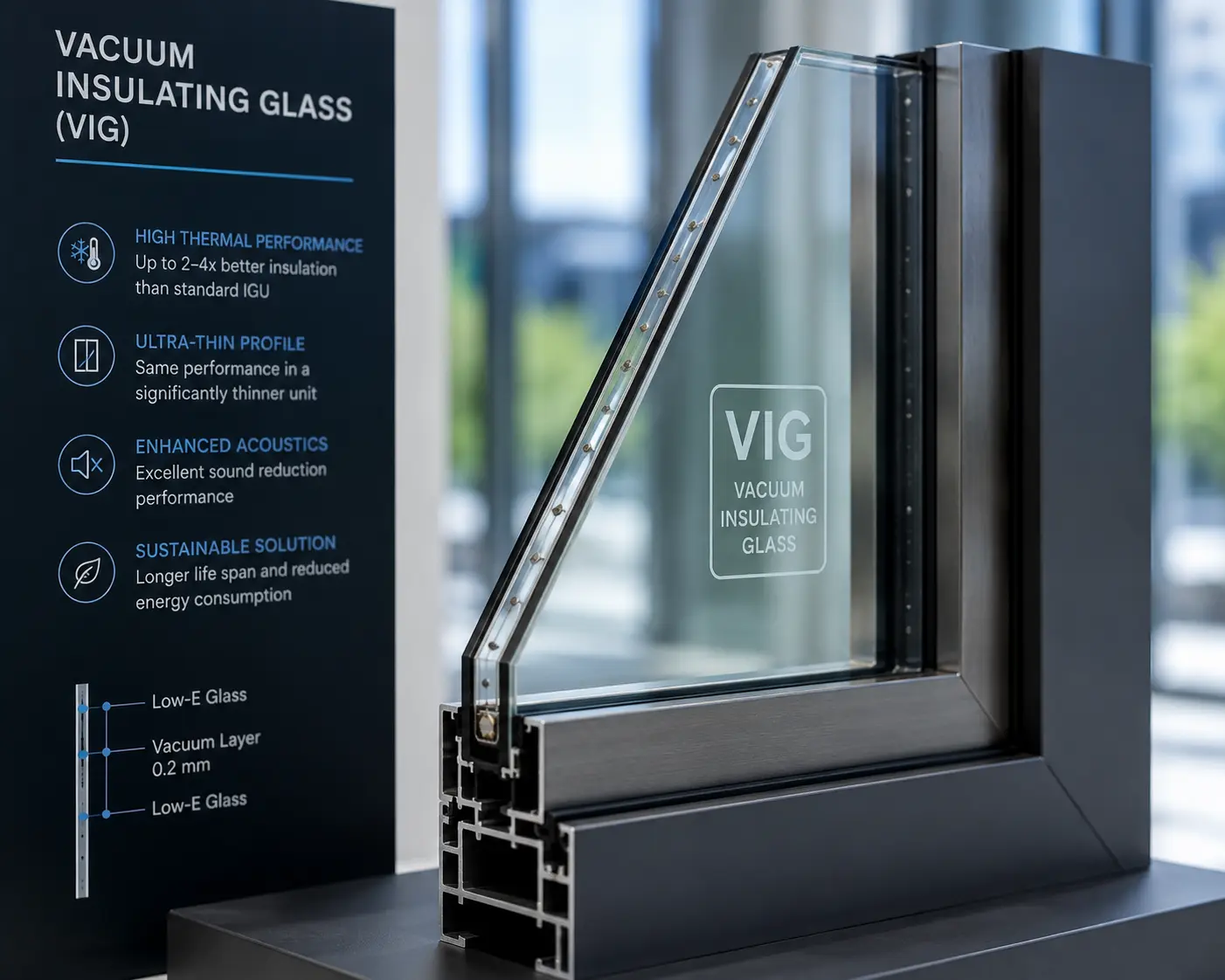
The Graduate School of Design's iconic stepped-terrace building just replaced 1,617 glazing units with a hybrid vacuum insulating glass system that delivered center-of-glass U-values of 0.06 and cut projected energy use by 22%. Here's what the project means for retrofit spec writers working on protected modernist buildings.
A Modernist Landmark Meets Modern Thermal Performance
Gund Hall, the 1972 concrete modernist building that has housed Harvard's Graduate School of Design for more than five decades, just became one of the highest-profile proof points yet for vacuum insulating glass (VIG) in retrofit work. A new generation of high-performance glazing from Vitro Architectural Glass is playing a central role in the transformation of Gund Hall, the iconic concrete modernist building that has housed Harvard University's Graduate School of Design since 1972.
The project is notable not because it invented new technology, but because it showed what happens when hybrid VIG assemblies are pushed into a real-world retrofit at scale—and how far the resulting numbers can move on a building that spec writers would normally consider a lost cause thermally.
The Performance Numbers
The original Gund Hall was a case study in what modernist glazing did badly. Known for its stepped terraces, expansive curtain walls and clerestory glazing, Gund Hall historically struggled with air and water infiltration, excessive glare and poor thermal performance.
The replacement assembly puts that legacy behind. Where a standard insulating glass unit typically achieves a U-value of 0.24, the hybrid VIG solution drove that value all the way down to 0.06 at the center of glass and delivered an overall system U-value of 0.19, providing roughly four times the thermal performance of conventional double glazing.
That's not a marketing number. That's a whole-system U-factor that a lot of new-construction curtain wall assemblies would struggle to hit even with triple glazing.
The scope was equally substantial. VacuMax™ VIG was selected for its tempered substrates and the use of Vitro-manufactured North American glass and coatings, ensuring long-term material consistency. In total, 1,617 original glazing units were replaced with a newly glazed area that totals 15,475 square feet.
The projected operational payoff: Vitro glass solutions are projected to reduce Gund Hall's energy use intensity by 22.2% and utility costs by 19.1%, while substantially improving comfort.
How the Assembly Was Detailed
The project team didn't just swap glass. They rebuilt the curtain wall to accept the VIG. As part of a comprehensive enclosure renewal, Bruner / Cott Architects, working with lighting designer Lam Partners and structural engineer Simpson Gumpertz & Heger, partnered with Vitro Architectural Glass, Oldcastle BuildingEnvelope, A&A Window Products and Shawmut to develop the solution.
The key detail is how the VIG was integrated. OBE officials say one of the most technically challenging aspects of the renovation was addressing the expansive glazing on the building's north and south elevations. The OBE360 team opted for hybrid vacuum insulating glass manufactured by Vitro Architectural Glass integrated into OBE's Reliance veneer curtainwall system to improve thermal performance. The VIG was positioned on the exterior of the system to optimize condensation resistance, a solution achieved through extensive modeling. The modified veneer system achieves a U-factor of 0.19, well below the requirements.
Positioning the VIG on the exterior—rather than treating it like a standard IGU—is the kind of design-assist decision that only happens when the glass manufacturer, curtain wall fabricator, and enclosure consultant are all at the table before shop drawings start.
Why This Matters for Spec Writers
Several practical takeaways for architects and building envelope consultants working on the aging North American commercial building stock:
- VIG is finally moving from pilot to production scale. VacuMax has now been deployed on more than one landmark project. Often used to replace monolithic glazing in older buildings, making it well-suited for retrofit projects, VacuMax™ VIG has been featured in several recent historic renovations and expansions, including the Pittsburgh Glass Center and the Harvard Graduate School of Design's Gund Hall.
- Domestic supply is coming online. This continued collaboration comes at a pivotal time as the North American market shifts to high-efficiency façades and sustainable building envelopes, reflecting a global trend of energy-conscious architecture. Vitro's long-term LandVac agreement points to VIG capacity being built out on this continent rather than imported.
- Hybrid VIG can unlock retrofit work on buildings that would otherwise fail code. A U-0.19 assembly on a concrete modernist landmark is now a data point, not a hypothetical.
- Design-assist matters more with VIG than with conventional IGUs. Positioning, edge conditions, and condensation modeling all shift when you're working with a glass unit that has R-values approaching those of an insulated wall.
The Bigger Retrofit Picture
Gund Hall isn't an outlier. It's a template. The North American building stock is full of 1960s and 1970s modernist buildings with single-glazed or early double-glazed curtain walls that are approaching the end of their useful lives, sitting on historic registers or protected by design review boards, and facing tightening municipal energy codes.
Until recently, spec writers on those projects had three unhappy choices: replace glass with a marginal thermal improvement, over-invest in mechanical systems to compensate, or delay the work entirely. Hybrid VIG assemblies quietly add a fourth option—one that Gund Hall now shows can deliver both the aesthetic continuity a historic building demands and the thermal performance a modern energy code requires.