
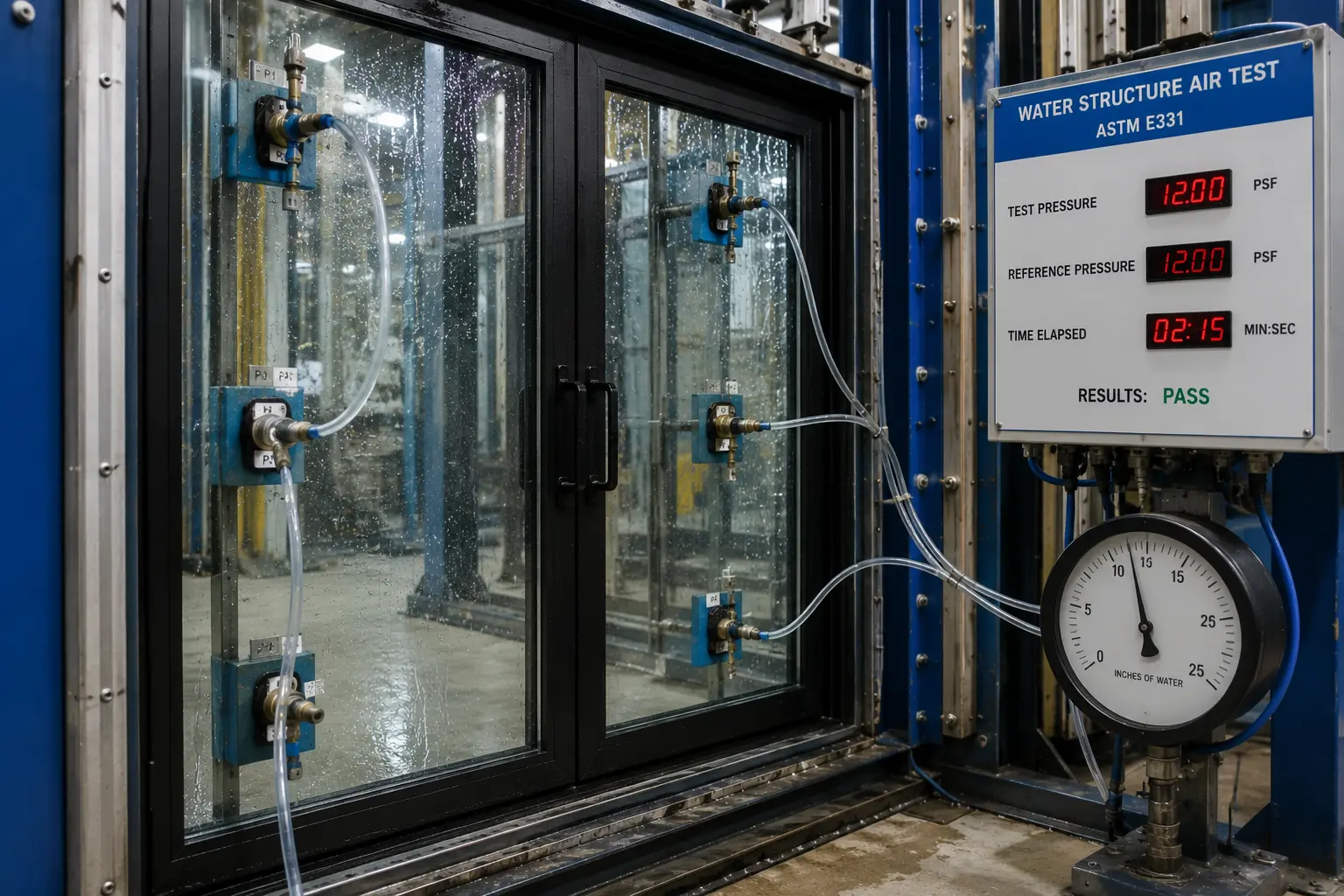
The 2026 edition of the North American Fenestration Standard has landed, and while most of the document is stable, one change has real teeth: the previously optional secondary designator is now mandatory, driven by FEMA and the Florida Building Commission's concerns over water intrusion in hurricane-prone regions.
A Quiet Update With One Loud Change
The joint standard that governs window, door, and skylight performance across North America has a new edition. The 2026 North American Fenestration Standard is the result of a multi-year effort by CSA Group, the Fenestration and Glazing Industry Alliance (FGIA), and the Window & Door Manufacturers Association (WDMA), with an agreement among the three organizations requiring NAFS to be reviewed every five years to keep current with changes in the fenestration industry.
For most of the document, this is a refinement, not a rewrite. As JELD-WEN's Lisa Bergeron, who served as FGIA's JDMG co-chair, put it, unlike with the previous version of NAFS, there were no major revisions for NAFS-26 with the exception of the secondary designator clarification. But that one change has significant downstream implications for product labels, test reports, and how specifiers verify compliance—especially on coastal projects.
What Actually Changed: The Secondary Designator Is No Longer Optional
The headline update is straightforward but consequential. The primary change in NAFS-26 clarifies requirements for the secondary designator used in fenestration product ratings. The change was proposed by the Federal Emergency Management Agency (FEMA) and accepted following discussions with the JDMG. Previously optional, the secondary designator is now mandatory and must be included on product test reports and labels.
Why this matters: the secondary designator carries the performance values that go beyond the basic Performance Class/Performance Grade primary designation—including water penetration resistance test pressure, which has historically been a major source of confusion and field failures.
The change was driven largely by increasing concerns related to water intrusion performance, particularly in coastal and hurricane-prone regions such as Florida. FEMA's proposal also aligned with recommendations previously raised by the Florida Building Commission.
For architects writing Division 08 specs in Gulf Coast, Atlantic seaboard, and other high-wind/high-rain markets, this means the data point you've been asking manufacturers to confirm in submittals will now appear on the product label by default.
Code Adoption Timeline: Why You Should Care Even If Your AHJ Is Slow
NAFS doesn't sit on a shelf—it gets pulled into building codes. It is referenced in the national building codes of both the U.S. and Canada through the IBC, IRC, IECC and NBC, and as states, provinces and territories adopt national codes, it becomes part of these more localized codes. The 2022 NAFS standard is already referenced in the 2024 editions of the International Building Code (IBC) and International Residential Code (IRC), and the recently released standard will be included in the 2027 editions of these codes.
On the Canadian side, the 2022 NAFS standard is referenced in the 2025 edition of the National Building Code of Canada, while the 2026 edition of NAFS will be proposed for inclusion in the NBC mid-cycle update.
Translation: NAFS-26 will be enforceable code language in many jurisdictions by 2027–2028. Manufacturers that wait will be caught flat-footed on relabeling and recertification.
Practical Implications by Role
For architects and spec writers:
- Update Division 08 11 00 and 08 50 00 spec sections to reference AAMA/WDMA/CSA 101/I.S.2/A440-26 for projects bid after code adoption in your jurisdiction.
- On coastal and hurricane-zone projects, require the secondary designator water penetration resistance value on submittals now—NAFS-26 makes this mandatory, but you can pull the practice forward.
- Watch for the forthcoming equivalency document. An equivalency document for NAFS-26 is expected to be developed later this year, providing guidance for compliance regarding testing to one version of NAFS versus another.
For manufacturers:
- Audit existing test reports. Any product previously labeled with only a primary designator will need its secondary designator added to comply with NAFS-26.
- Coordinate with your certification body on label artwork updates. Even if your products already meet the underlying water performance, the label format change is non-trivial across SKUs.
- Engineering teams should review water penetration test data against the more granular reporting now required.
For contract glaziers and GCs:
- Submittal review checklists need a refresh. The water test pressure value will now be on labels and reports by default—use it during installation QA to confirm the delivered product matches what was specified, particularly on storefront and operable window scopes in coastal projects.
- Be ready for AHJ inspectors in Florida and other coastal states to scrutinize labels more closely.
The Bigger Picture
NAFS-26 is not the dramatic rewrite some in the industry expected. But by elevating the secondary designator from optional to mandatory, the JDMG has quietly addressed one of the most persistent gaps between what gets tested, what gets labeled, and what actually performs on a building exterior when a tropical storm rolls through. For an industry still digesting hurricane-related claim losses from the past several seasons, that's the kind of standards work that pays for itself.