
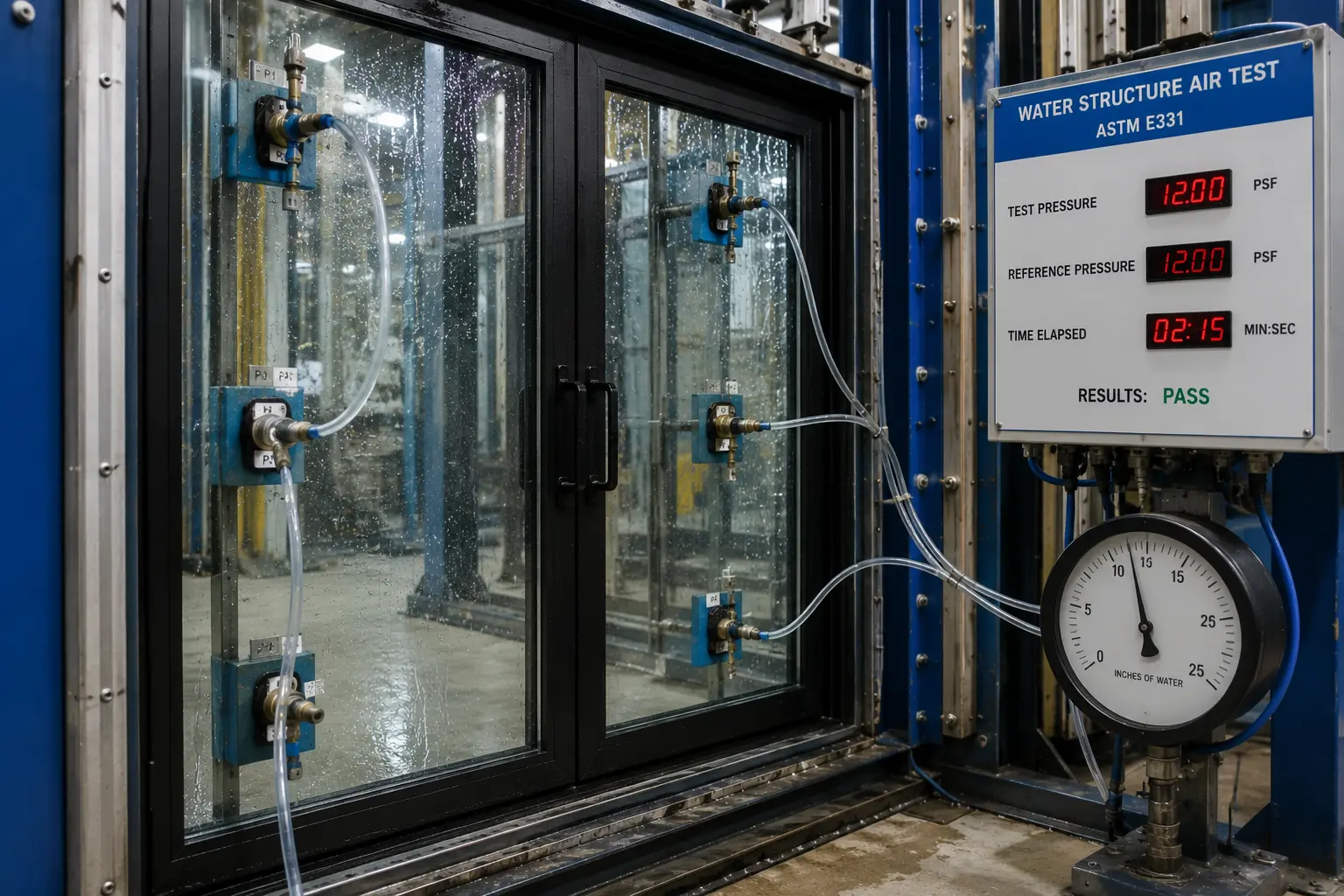
The Accredited Standards Committee Z97 has published the first major revision of ANSI Z97.1 in over a decade. The 2026 edition adds vacuum insulating glass to the safety qualification framework, consolidates five weathering standards into one, and reshapes how impact tests are classified.
A Safety Standard Catches Up to Modern Glazing
The American National Standard that governs safety glazing in buildings just got its first significant refresh in more than a decade—and the updates matter for anyone specifying, fabricating, or installing architectural glass.
The Accredited Standards Committee Z97 (ASC Z97) announced the publication and industry acceptance of the updated ANSI Z97.1-2026 For safety glazing materials used in buildings – safety performance specifications and methods of test. ANSI Z97.1-2026 establishes the specifications and test methods for evaluating safety glazing materials intended to reduce the risk of cutting and piercing injuries after glass breakage from human impact.
The standard has been the backbone of U.S. safety glazing compliance since the 1960s. But building practices have moved on, and the 2015 edition (reaffirmed in 2020) hadn't kept pace with newer product categories—especially vacuum insulating glass (VIG), which has become a viable retrofit and high-performance option in the last three years.
What's Actually Changed
According to reporting on the new edition, the key technical changes center on scope, weathering, and referenced standards:
- The addition of vacuum insulating glazing (VIG) to go along with laminated, tempered, organic-coated, plastic, mirror and bent glass
- The consolidation of five separate weathering standards (D1435, D2565, D4459, G155, ISO 4892-2) into a single umbrella practice: ASTM C1900
- The addition of ASTM E903 as an alternate visible light transmittance measurement method
- More flexibility to impact tests and classification
Glass Magazine's coverage notes that the 2026 edition also brings technical updates, improved alignment with current building practices, and enhanced usability for architects, specifiers, code officials, manufacturers, and testing laboratories.
Why VIG Inclusion Is the Headline
Until now, VIG products existed in a gray zone within U.S. safety glazing compliance. Manufacturers pushing vacuum-insulated units into hazardous locations—doors, sidelites, tub and shower enclosures, low sills—had to work through a patchwork of adjacent standards or seek equivalency arguments.
With the 2026 update, VIG now has a defined path. The revision explicitly incorporates VIG safety qualification through testing protocol clarification. That's a green light for spec writers who have been holding back on VIG in hazardous locations because certification pathways were unclear, and it aligns the U.S. safety framework with the direction the market is already moving—see Vitro's recent Harvard retrofit and LuxWall's ongoing NYC deployments.
The Weathering Consolidation Is a Bigger Deal Than It Sounds
Rolling five separate weathering test standards into a single ASTM C1900 umbrella isn't glamorous, but it removes a persistent headache for laminated and organic-coated glass manufacturers who previously had to navigate overlapping ASTM and ISO protocols. Testing labs get a cleaner reference; manufacturers get more predictable qualification timelines; specifiers get one line to cite instead of five.
The addition of ASTM E903 as an alternate for visible light transmittance measurement also gives fabricators more flexibility—particularly for coated or textured products where the legacy method wasn't a clean fit.
Code Adoption Timeline
ANSI Z97.1 is referenced through the International Building Code, International Residential Code, and by state and local safety glazing regulations. Historically, code adoption of a new Z97.1 edition takes one to three cycles. Expect the 2026 edition to appear in the 2027 IBC/IRC referenced standards list, with jurisdictional adoption following through 2027–2029.
In the meantime, projects specifying to "the latest edition" of Z97.1 in their glazing sections will pick up the new requirements immediately. Projects locked to a specific dated edition (typically 2015) will not—but AHJs may accept the newer standard on request.
Practical Implications for the Spec Sheet
For architects and specifiers: Update your master glazing specifications to reference ANSI Z97.1-2026 where the AHJ allows. If you've been avoiding VIG in hazardous locations, that constraint is loosening.
For glazing contractors: Confirm that fabricator submittals cite the correct Z97.1 edition. Mixed submittals citing both 2015 and 2026 in the same package will happen during the transition.
For manufacturers and testing labs: The weathering consolidation to ASTM C1900 will require updates to internal QA procedures and third-party certification documentation. SGCC label formats will need to reflect the new edition designation.
ANSI Z97.1-2026 is now available through ANSI at ansi.org. Stakeholders are encouraged to obtain the latest edition and implement its provisions in upcoming projects and product evaluations.