
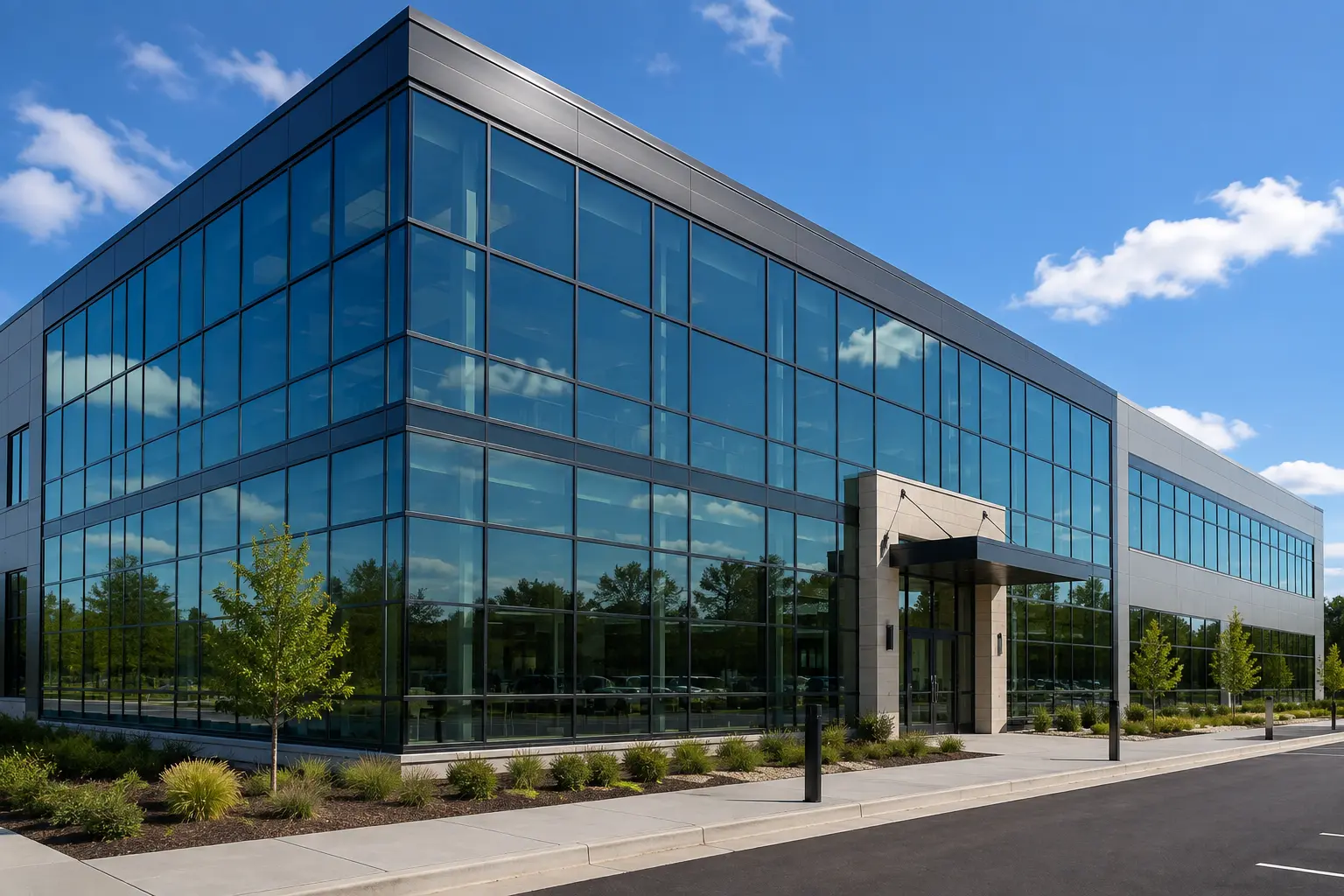
As facades take on more responsibility for energy performance, resilience, and embodied carbon, Kawneer's MetroView 4-SSG Window Wall points to where mid- and high-rise envelope specs are heading—slab-to-slab construction, structural silicone glazing, and hurricane-and-seismic testing in a single system.
For two decades, facade design has been an argument about transparency—bigger glass, narrower sightlines, more uninterrupted views. That argument hasn't gone away, but a new one has moved alongside it: what else does the envelope have to do? Energy performance. Occupant comfort. Resilience. Embodied carbon. And increasingly, all of it in a single assembly. Kawneer's MetroView 4-SSG Window Wall, spotlighted in Architectural Record's August 3, 2026 coverage of facade performance trends, is one of the clearest expressions yet of where the mid- and high-rise envelope spec is moving.
From Transparency to Total Performance
For much of the past two decades, advances in facade design centered on transparency, with larger expanses of glass, thinner sightlines, and uninterrupted views becoming defining characteristics of residential towers, workplace environments, and institutional buildings. That trend continues, but building envelopes are expected to do much more. Across multifamily, office, healthcare, higher education, and civic projects, facades are increasingly expected to contribute to energy performance, occupant comfort, resilience, and sustainability objectives.
The practical result: architects are evaluating facade systems through a broader lens, considering how they perform over the life of a building while supporting the project's design intent. That's a fundamentally different specification exercise than picking a curtain wall on U-factor and sightline alone.
What MetroView 4-SSG Actually Does
Designed for multifamily, office, hospitality, and institutional buildings, Kawneer's MetroView 4-SSG Window Wall incorporates features that align with many of today's facade performance priorities. The system is engineered to meet seismic requirements and support impact-testing requirements for hurricane-prone regions, combining slab-to-slab construction, expansive glazing, and thermal and acoustic performance in a single facade solution for mid- and high-rise projects.
A few things are worth unpacking there for specifiers:
- Slab-to-slab window wall vs. curtain wall. Window wall spans floor-to-floor rather than hanging in front of the slab edge. That eliminates perimeter fire-safing details, simplifies floor-edge coordination, and typically reduces overall system cost—but historically at the price of performance headroom on tall buildings. A 4-SSG (four-sided structural silicone glazed) window wall that clears hurricane impact and seismic testing narrows that gap considerably.
- Structural silicone glazing. Four-sided SSG delivers the flush, all-glass exterior look that developers and design review boards increasingly demand, without the horizontal or vertical pressure-plate lines that break up the facade.
- Combined hazard performance. Getting seismic and hurricane impact ratings in the same system matters for coastal California, the Pacific Northwest, and any project touching multiple jurisdictional overlays. It also matters for insurers and building performance standard compliance.
The Materials Story
On the sustainability side, architects are paying closer attention to aluminum systems manufactured with recycled content and lower-carbon production methods, which offer opportunities to reduce embodied carbon while maintaining durability and performance. That's a meaningful shift. Aluminum framing has traditionally been treated as a fixed line item—the coating, the substrate, and the finish were where the material conversation happened. Now the extrusion itself is a spec variable, with recycled-content billets and low-carbon smelting increasingly showing up in EPDs and LEED submittals.
For manufacturers, that's a signal to get EPDs published, get recycled content quantified, and get the low-carbon story documented in a way that spec writers can actually use.
Practical Implications
For architects and facade consultants: Window wall is no longer the value-engineered fallback. Systems like MetroView 4-SSG are being positioned to compete with unitized curtain wall on high-performance mid- and high-rise, particularly where slab-edge complexity, floor-to-floor glazing, and mixed hazard requirements combine. Reconsider the window-wall-vs-curtain-wall decision earlier in schematic design rather than treating it as a downstream trade.
For general contractors: Slab-to-slab construction changes the sequencing story. Window wall typically installs from inside the building floor-by-floor, which can decouple facade progress from exterior hoisting logistics and reduce swing-stage exposure. On tight urban sites, that's a real schedule lever.
For building product manufacturers: The bar for a competitive mid-rise framing system is now four-sided SSG aesthetics, hurricane impact certification, seismic testing, thermal performance that satisfies stricter energy codes, acoustic ratings for multifamily, and a defensible embodied carbon story. Systems that check only three or four of those boxes will lose share to systems that check all of them.
The Bigger Picture
The MetroView 4-SSG announcement is less about a single new SKU than about where the mid-rise envelope conversation is going. Facades are being asked to solve for energy, resilience, aesthetics, and carbon simultaneously, and single-purpose products—the good-thermal system, the good-hurricane system, the good-looking system—are giving way to platforms engineered to solve for all of it in one assembly. Spec writers who are still bidding those problems separately are working from an out-of-date playbook.