
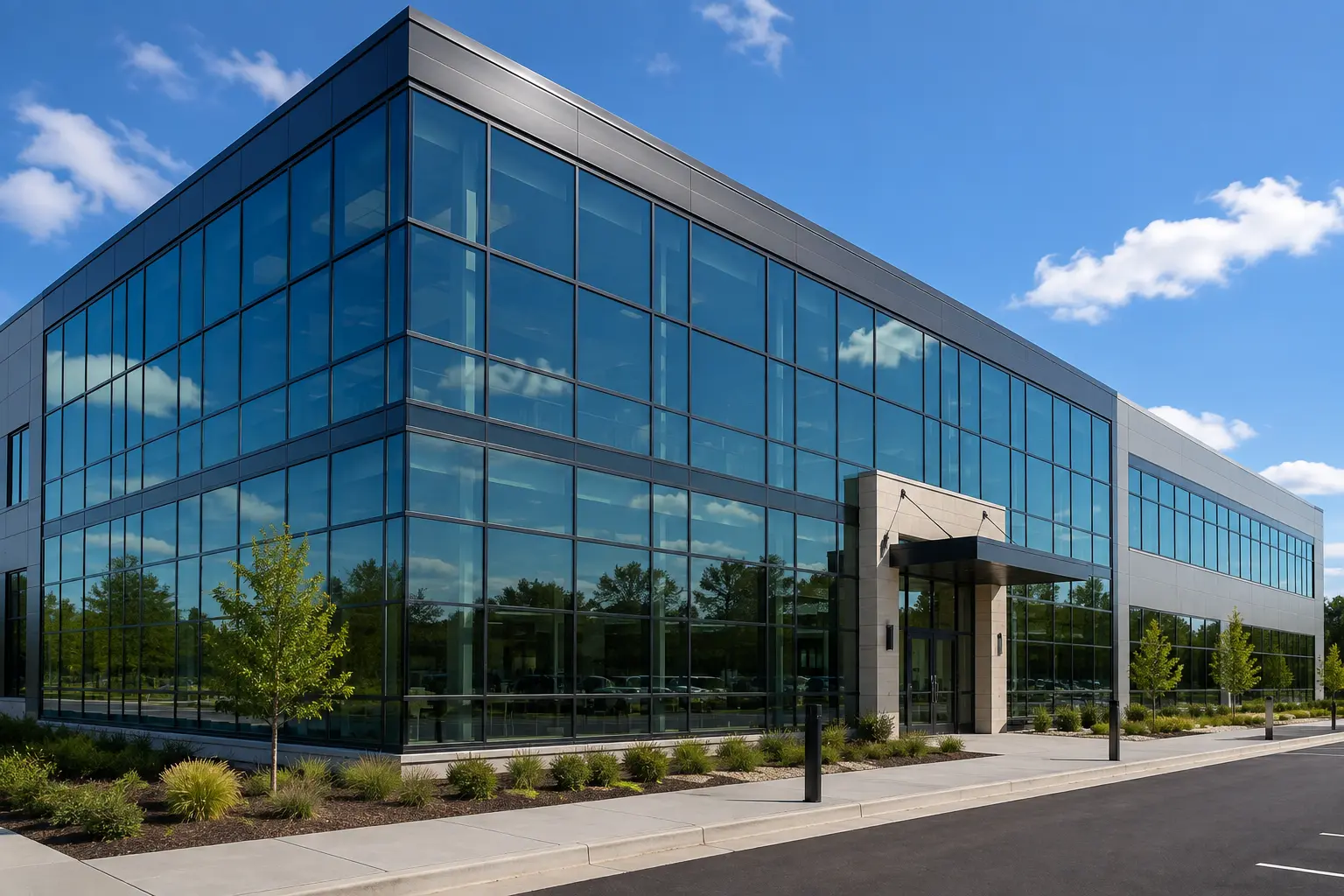
Kawneer's new MetroView 4-SSG is a structural-silicone-glazed, unitized window wall built around a 2.5-inch sightline and 5-by-14-foot glass capacity. The system targets a gap in the market: slab-to-slab retrofits and mid-rise multifamily where curtain wall is overkill but punched openings can't deliver the daylight.
A New Tool for the Slab-to-Slab Problem
Kawneer has added another option to the increasingly crowded window wall category, and this one is aimed squarely at the projects that have been giving spec writers headaches: mid- and high-rise multifamily, office, and institutional buildings that need floor-to-ceiling glass without the cost and complexity of a full unitized curtain wall.
Announced May 28, 2026, the MetroView 4-SSG Window Wall is a unitized system that combines a clean aesthetic with acoustic and thermal performance. It's developed to deliver visual impact to both new construction and retrofit slab-to-slab commercial applications, and is suited to mid- to high-rise multifamily, office, and institutional projects that demand a combination of daylighting, enhanced acoustic capability, and thermal efficiency.
The headline numbers matter. According to Kawneer's product page, the system runs a 2.5-inch sightline on a 5.5-inch mullion depth, with a structural silicone glazed (SSG) unitized, inside-glazed configuration, and supports glass sizes up to 5 feet by 14 feet. That glass capacity is the most consequential spec on the data sheet.
Why 14-Foot Lites Change the Conversation
Multifamily towers are pushing floor-to-floor heights past 10 feet in luxury markets, and offices are chasing taller daylight planes to compete with newer Class A inventory. Window wall has historically capped out below that, forcing designers into curtain wall pricing whenever the floor-to-floor exceeded what a stick window wall could safely span.
By engineering MetroView 4-SSG to handle 5-by-14 lites in a unitized, shop-glazed package, Kawneer is going after specifications that have traditionally bounced between two product categories:
- Stick window wall, which is cheap and contractor-friendly but limited in glass size and thermal performance
- Unitized curtain wall, which delivers the aesthetic but carries the cost premium of a slab-edge anchored system
The MetroView 4-SSG splits that difference. It's inside-glazed and unitized at the floor, meaning it stacks between slabs rather than hanging off them — which keeps the structural engineering simpler — but it ships with pre-installed structural silicone glass for a flush exterior face that reads like curtain wall from the street.
The Retrofit Angle
The slab-to-slab retrofit market is where this system gets interesting for general contractors and envelope consultants. Existing mid-rise office stock built in the 1980s and 1990s often has punched openings or ribbon windows that fail current energy codes and don't deliver the daylight today's tenants demand. Replacing those facades with full unitized curtain wall typically requires extending or modifying floor slabs.
A unitized window wall that installs between existing slabs avoids most of that structural work. Kawneer's positioning — that MetroView 4-SSG integrates with Kawneer's broader portfolio of architectural aluminum systems, reinforcing the company's ability to act as a single-source provider for high-performance building envelopes — is a clear signal that the company expects glaziers to package this with their existing entrance, storefront, and curtain wall lines on adaptive reuse jobs.
Daylighting as a Code and Wellness Driver
Kawneer is leaning into the wellness angle. "Daylighting is critically important in many applications for occupant well-being and productivity," said Chris Giovannielli, Director of Product Management for Kawneer.
That's not just marketing. WELL Building Standard credits, LEED daylight credits, and an increasing number of multifamily lease comp sheets put a hard value on glass-to-floor-area ratios. A taller vision lite directly translates to daylight autonomy hours and view factor compliance — both metrics architects now have to model and document.
What Spec Writers Should Do
A few practical takeaways for Division 08 spec writers and envelope consultants:
- Verify the U-factor data. Kawneer is marketing "high thermal performance" but hasn't publicly published a single overall system U-factor for MetroView 4-SSG the way it has for the 2500 UT PLUS curtain wall. Pull the technical data sheet before specifying for projects in IECC Climate Zones 5 and above.
- Check seismic data against your jurisdiction. The system is tested to meet seismic requirements, but West Coast and high-seismic interior markets will want the specific test report.
- Coordinate slab edge tolerances early. Inside-glazed unitized systems are sensitive to slab edge variation; this needs to be on the structural engineer's radar from schematic design.
- Confirm acoustic ratings for multifamily. Kawneer is marketing acoustic performance, but STC and OITC values vary significantly with glass makeup. Don't assume.
The broader signal here is that the window wall category is maturing into a serious competitor for curtain wall on mid-rise projects. For glaziers, that's an opportunity to win work that used to default to the unitized specialists.