Apogee Enterprises just folded a 71-year-old translucent daylighting brand into its Architectural Glass segment. The move signals a broader building envelope play—one that combines transparent glazing, translucent panels, unitized curtain walls, and skyroofs under a single specification umbrella.
A Daylighting Play, Not Just Another Glass Deal
Apogee Enterprises has closed on the acquisition of Kalwall Companies, folding one of the best-known names in translucent daylighting into its Architectural Glass segment. The deal, first announced May 28 and completed in the fiscal 2027 second quarter, is valued at up to $115 million on a cash-free, debt-free basis.
The structure: $105 million in cash at close and up to $10 million in earnout tied to financial performance through the end of Apogee's fiscal 2027 third quarter. Apogee funded the deal through available cash and its existing revolving credit facility—no separate public raise.
For spec writers who have been treating Kalwall and Apogee's architectural brands as separate specification worlds, that separation is now over.
Who Kalwall Is and Why It Matters
Kalwall is a vertically integrated U.S. manufacturer of high-performance translucent daylighting solutions, differentiated by a 71-year brand history and proprietary polymer and coating application processes. Under the Keller family, it built out a portfolio that spans wall systems, unitized curtainwalls, skyroofs, skylights and canopies, marketed under Kalwall, Structures Unlimited, and Kal-lite.
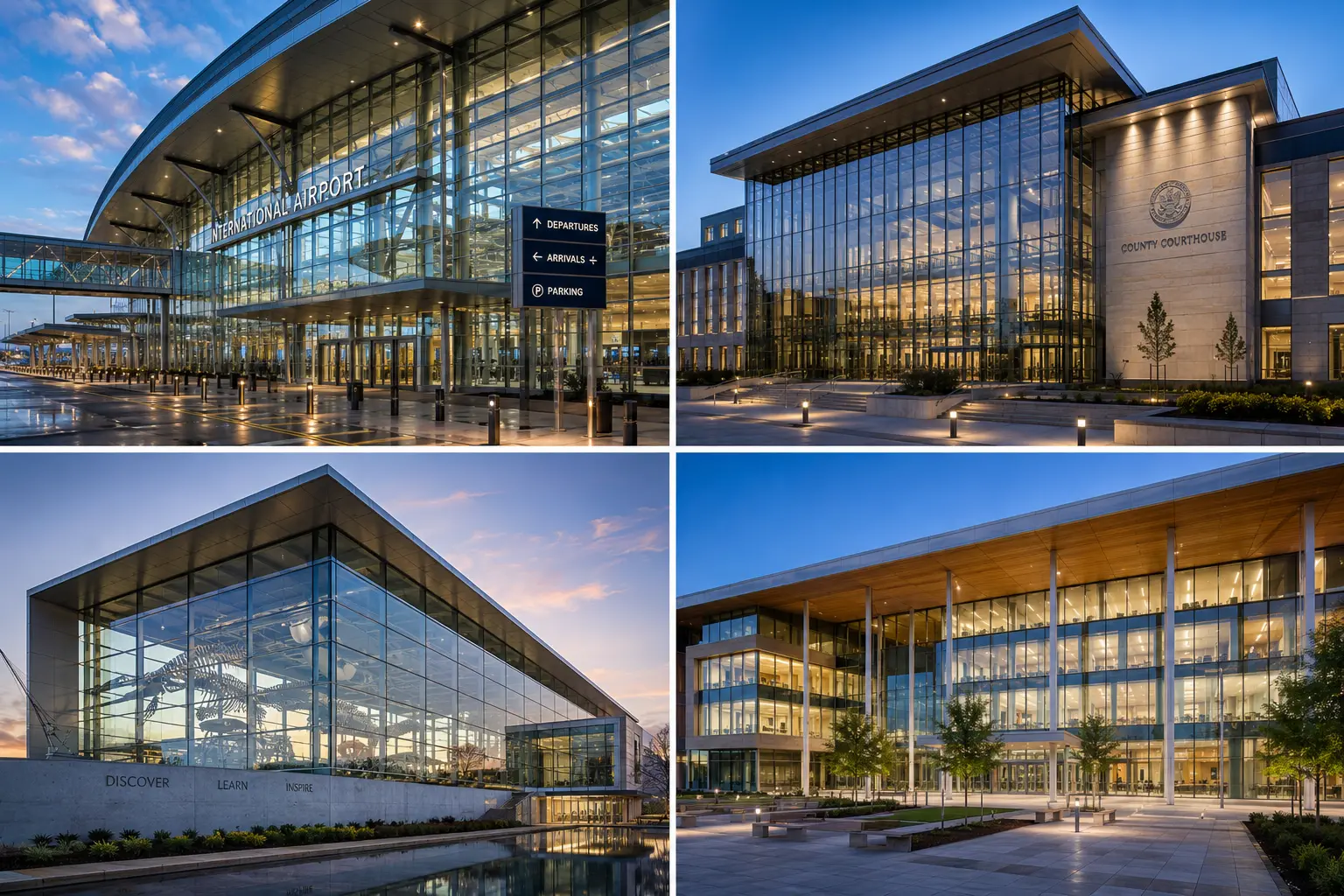
In practice, that means Kalwall shows up in gymnasiums, natatoriums, museums, transit terminals, and educational buildings where diffuse daylight and thermal performance matter more than view glass. It's a specification niche that architectural glass companies have historically circled but rarely competed in directly.
The Strategic Logic
Apogee plans to integrate Kalwall into its Architectural Glass segment to build what it describes as a more comprehensive high-performance substrate offering for building envelope solutions. The integration is expected to yield $4 million in operational cost synergies by the end of fiscal 2029, with Kalwall contributing roughly $85 million in revenue and a 15% adjusted EBITDA margin in year one—rising toward a long-term target of 20%.
According to Apogee CEO Don Nolan, the acquisition strengthens the Architectural Glass segment and "accelerates our leadership in high-performance building envelope solutions."
Translation for the building industry: Apogee now controls a broader piece of the envelope spec, from transparent vision glazing through translucent daylighting panels and pre-engineered daylighting structures.
What This Means for Architects and Spec Writers
- Broader single-source specification. Firms that have historically specified Kalwall on its own can now potentially bundle translucent panels with Apogee's architectural glass, coatings, and framing systems through coordinated sales channels.
- Cross-sell in institutional markets. K-12, higher-ed, recreation, and transit projects—Kalwall's core end markets—are exactly where Apogee's Tubelite, EFCO, and Wausau storefront and curtain wall products already compete. Expect coordinated pursuit strategies on projects that combine vision glazing with translucent daylighting infill.
- Detailing continuity. One of the perennial headaches on projects that mix translucent panels with conventional glazing is transition detailing—head, sill, and jamb interfaces between two different manufacturers' systems. Common ownership creates the opportunity (though not the guarantee) for pre-engineered transitions.
- Envelope embodied carbon accounting. As EPDs become standard practice for glazing, aluminum framing, and insulation, having translucent daylighting panels under the same corporate umbrella simplifies whole-envelope carbon reporting for LEED, Living Building Challenge, and Buy Clean procurement.
What This Means for Contractors and Glaziers
The near-term reality is that Kalwall will continue to be sold and installed by its existing specialty subcontractor network. Translucent panel installation is a distinct trade skill—the panels are handled, sealed, and detailed differently than IGUs, and are typically not installed by conventional curtain wall glaziers.
What could change: purchasing leverage. If Apogee starts routing Kalwall pricing, lead times, and shop drawing coordination through its broader project management infrastructure, glazing contractors on mixed-envelope projects may see tighter schedules and cleaner procurement paths.
What to Watch
The operational synergy target—$4 million by fiscal 2029—is modest, suggesting Apogee sees this less as a cost play and more as a market-position play. The revenue target ($85 million in year one) and the margin trajectory (15% moving toward 20%) suggest Kalwall's specification-driven, premium-priced niche is expected to stay premium.
For manufacturers competing in the translucent daylighting category—CPI Daylighting, Major Industries, Duo-Gard—the calculus just changed. A publicly traded parent with a $1.4 billion revenue base and a national architectural sales force is now behind the category leader.