
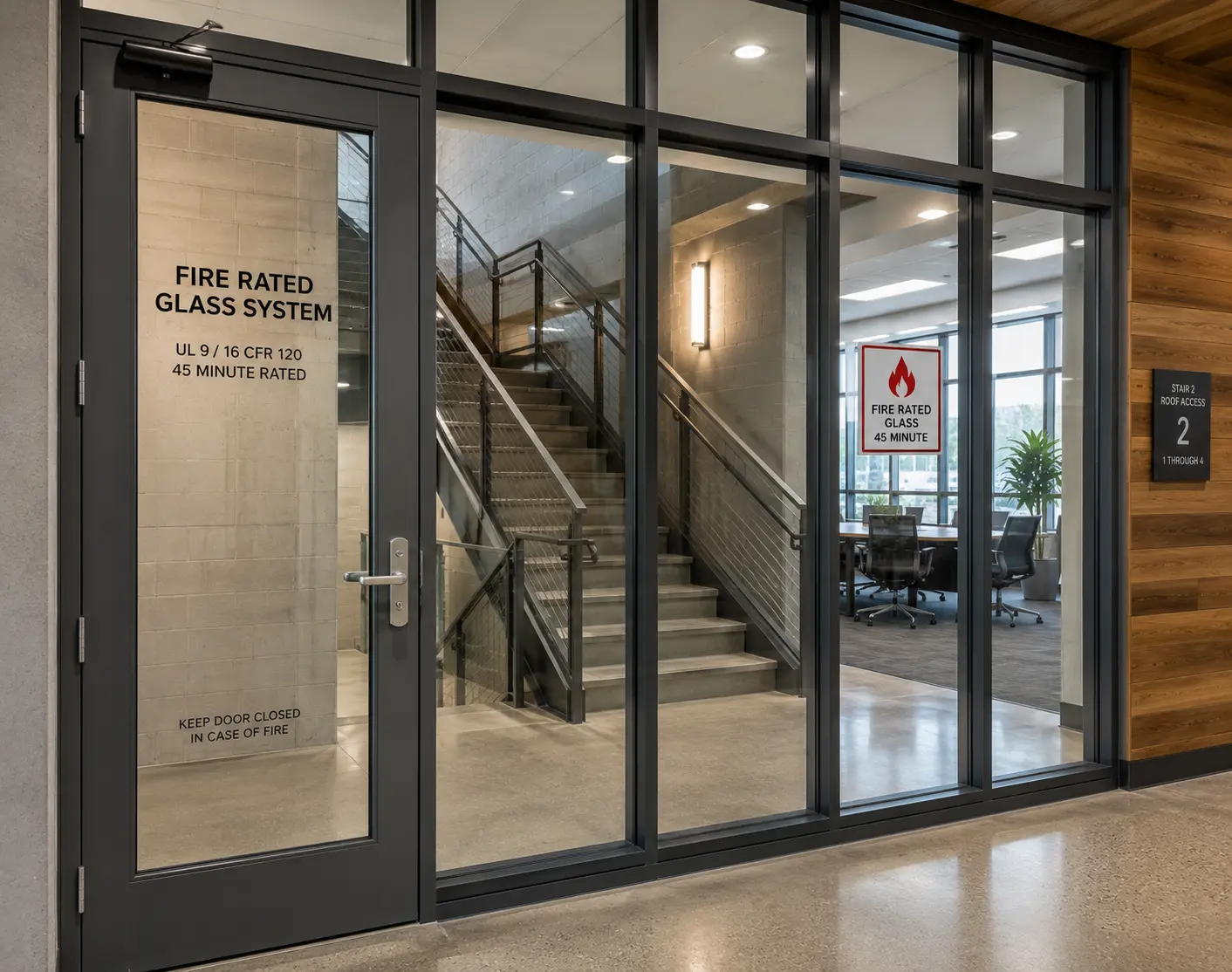
The newly published ANSI Z97.1-2026 safety glazing standard adds vacuum insulating glass to its scope for the first time, consolidates weathering references, and introduces a new VIG impact protocol. Here's what architects, specifiers, and glass fabricators need to know before writing it into a project manual.
A Decade-Overdue Revision Lands at a Pivotal Moment for VIG
The Accredited Standards Committee Z97 has published ANSI Z97.1-2026, the long-awaited revision of the national safety glazing standard for building materials. For residential door and window manufacturers, the 2026 update represents the first significant change in the standard's technical content in over a decade, following a 2020 edition that reaffirmed 2015 criteria.
The headline change: vacuum insulating glass finally has a recognized safety-performance pathway in the U.S. standard. The 2026 edition adds vacuum insulating glazing (VIG) to go along with laminated, tempered, organic-coated, plastic, mirror and bent glass. That matters because VIG — thin, high-R-value assemblies that can approach triple-glazed U-values in the thickness of a single IGU — have been pushed into North American window and curtain wall specs faster than the safety standards have been able to catch up.
What Actually Changed
The 2026 edition reflects a focused technical cleanup rather than a wholesale rewrite. According to published summaries from the committee, the key updates include:
- Vacuum Insulating Glazing is now included within the standard's scope, and a VIG impact and rating protocol has been added.
- Chemically strengthened glass is addressed more clearly, including an exclusion clarification and an engineering-based exception.
- Five separate weathering standards (D1435, D2565, D4459, G155, ISO 4892-2) have been consolidated into a single umbrella practice: ASTM C1900.
- Bake/boil thermal testing and result evaluation are now delegated to ASTM C1914.
- ASTM E903 has been added as an alternate visible light transmittance measurement method.
The VIG definition itself is now explicit. The standard defines VIG as a manufactured assembly of at least two lites of glass, hermetically sealed with a narrow, "highly evacuated" space maintained by spacers (pillars).
How VIG Gets Tested — and Marked
For glazing contractors and submittal reviewers, the practical change is that a VIG unit is evaluated as an assembly, not as individual lites. ANSI Z97.1-2026 now requires vacuum insulating glass (VIG) to be tested as a full unit with a 100-pound shot bag, not individual panes, and mandates permanent, legible labels showing supplier details, impact class (A or B), and size rating.
The traditional drop-height classification remains: Class A must withstand a drop height between 48 and 48-½ inches, and Class B must withstand a drop height between 18 and 18-½ inches.
Marking responsibility is also clarified. Every piece of safety glazing must be legibly marked with the supplier's name, the "ANSI Z97.1-2026" designation, the size classification and the drop height class. Stock sheets of laminated glass must be marked by the original manufacturer, while cut-to-size laminated glass must be marked by the company producing the finished product. Tempered glass must be marked by the company producing the finished cut-to-size product.
The Regulatory Catch Specifiers Need to Know
Here's the nuance that will trip up anyone citing the new standard in a specification: publication does not equal federal adoption. Although ANSI Z97.1-2026 has been published, the U.S. Consumer Product Safety Commission currently continues to reference ANSI Z97.1-2015 (R2020) for regulatory compliance under 16 CFR Part 1201.
In practical terms, for hazardous-location glazing regulated by CPSC — tub and shower enclosures, storm doors, entrance sidelites, glazing adjacent to doors — the 2015 edition still governs the legal compliance test. The 2026 edition is the better technical document, but spec writers should reference both until CPSC updates its incorporation.
For cross-border projects, the Canadian side is already caught up. The Canadian General Standards Board has already harmonized its CAN/CGSB 12.1 standard with the 2026 version.
Practical Implications for the Project Team
For architects and specifiers: VIG now has a legitimate path onto the submittal. Spec sections that previously defaulted to "safety glazing conforming to ANSI Z97.1" should be updated to call out the 2026 edition where VIG is being considered for storefronts, partitions, or windows in impact-regulated locations — while retaining the 2015 reference where CPSC jurisdiction applies.
For glass fabricators: Marking and labeling workflows need an audit. The edition designation on the permanent mark drives everything downstream, including the way inspectors and third-party certifiers verify compliance on site.
For window and door manufacturers: The consolidation of weathering references into ASTM C1900 and thermal testing into ASTM C1914 reduces test burden in theory, but only if internal QA procedures and supplier test reports are updated to cite the new umbrella standards.
For building envelope consultants: Expect VIG to show up more frequently in value-engineering conversations now that it has a defensible safety basis in the national standard. The thermal case for VIG has always been strong; the missing piece was a recognized impact-safety protocol. That gap just closed.