AGC has issued 16 third-party verified Environmental Product Declarations covering its Pyrobel and Low-Carbon Pyrobel fire-resistant glass lines—closing a long-standing data gap for life cycle assessments and pushing embodied carbon transparency into the fire-rated glazing category for the first time at this scale.
A Quiet but Important Shift in Fire-Rated Glazing
Fire-resistant glass has historically sat in a sustainability blind spot. While clear float, low-E coated, and laminated architectural glass have steadily accumulated Environmental Product Declarations (EPDs) over the last several years, the intumescent laminated glazings used in fire-rated assemblies—stair enclosures, exit corridors, atrium separations, lab partitions—have been harder to characterize. AGC Glass Europe just changed that.
AGC has announced the availability of third-party verified Environmental Product Declarations (EPDs) for its Low-Carbon Pyrobel fire-resistant glass as well as for standard Pyrobel glass. In total, 16 official EPD declarations are now published on the INIES platform, covering several Pyrobel product families in both standard and low-carbon versions, for stock sizes and cut sizes.
For architects and building envelope consultants juggling LEED v4.1, BREEAM, the EU Taxonomy, and an accelerating wave of state and municipal embodied carbon rules in the U.S., this is more than a press release. It is one of the first credible, audited data sets that lets specifiers account for the carbon footprint of fire-rated lites in a whole-building LCA.
What the Low-Carbon Version Actually Delivers
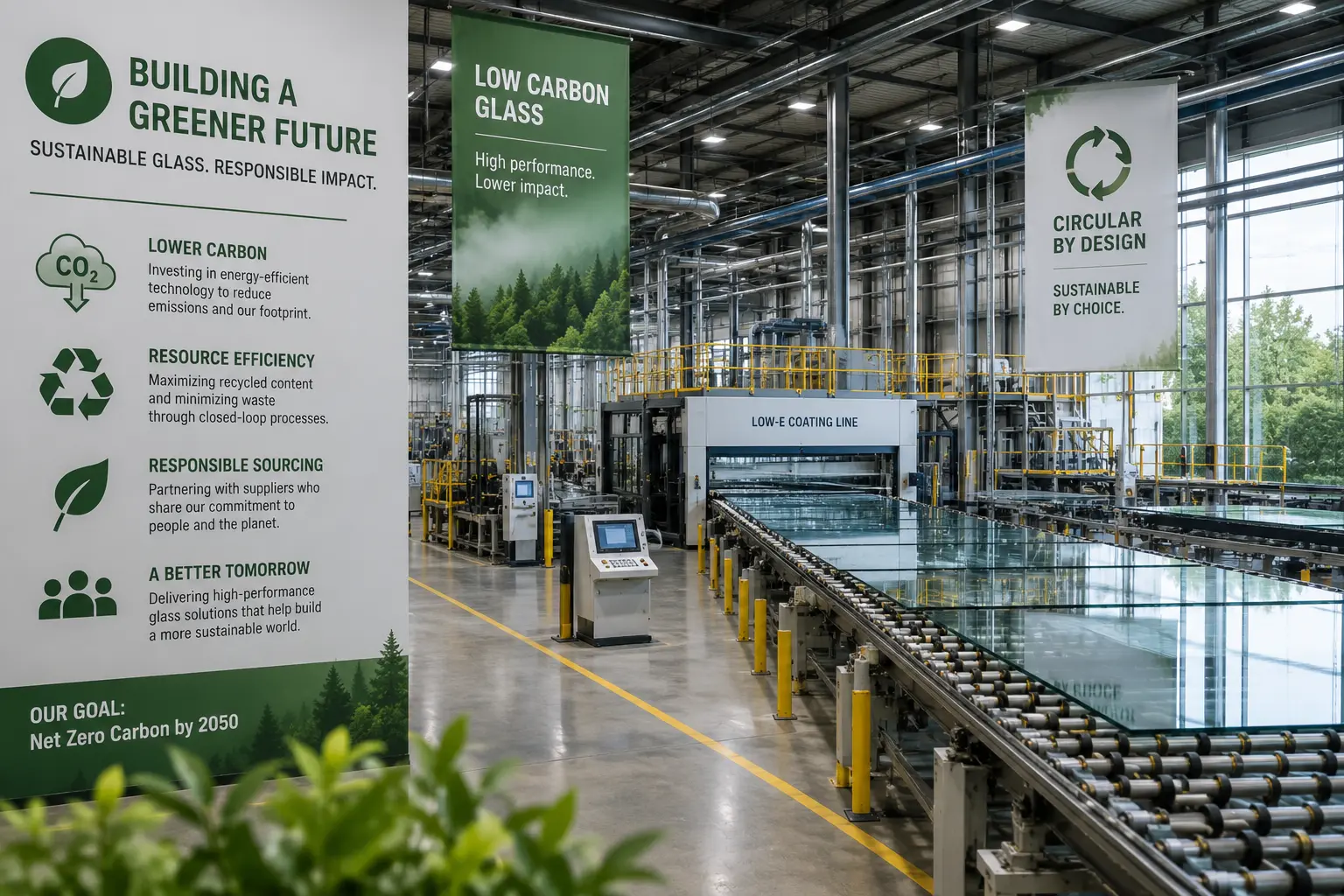
The headline number is significant. Low-Carbon Pyrobel Glass combines the performance of AGC's Low-Carbon Glass, the use of green electricity and the optimisation of the manufacturing process to achieve a 45 to 50% reduction in embodied carbon compared to standard Pyrobel. AGC achieves that through a value-chain approach: the recycled content of Low-Carbon Glass is above 50%, and it is produced with sustainably sourced raw materials in highly efficient melting furnaces with electro-boosting and renewable energy. Moreover, transport between AGC Group sites for finishing processes has been optimised.
For reference on the baseline, the embodied carbon of standard Pyrobel 16 is 60.5 kgCO2eq/m², while that of Pyrobel 25 is 98.1 kgCO2eq/m². Those are not trivial numbers when a project includes large fire-rated screens or full glazed exit stair enclosures across multiple floors.
Critically for design teams worried about substitution risk: Low-Carbon Pyrobel Glass delivers the same aesthetics, quality, technical performance and fire-resistant properties as AGC's standard Pyrobel. The product range covers the workhorse fire ratings—Pyrobel and Pyrobelite fire-resistant glazing are laminated glass with transparent intumescent interlayers capable of delivering fire protection for 30 to 180 minutes, complying with Integrity and Low Radiation (EW) criteria as well as Integrity and Insulation (EI) criteria.
Why This Matters for Specifiers
A few practical implications for Division 08 and Division 07 teams:
- LCA completeness. Whole-building life cycle assessments increasingly require product-specific EPDs rather than industry averages. Until now, fire-rated glazing was often modeled with generic laminated-glass proxies, which understated impact in some cases and overstated it in others. By combining proven fire performance with significantly lower Global Warming Potential (GWP), Low-Carbon Pyrobel represents an important step forward in sustainable building materials, and third-party verified EPDs provide transparent and reliable environmental data, supporting architects, designers and project stakeholders in meeting sustainability requirements.
- Procurement leverage. With 16 declarations covering both stock and cut sizes, fabricators and glaziers can now price low-carbon variants against standard product and pass the carbon savings through to owners chasing certification points or jurisdictional embodied-carbon caps.
- Pressure on competitors. AGC is setting a benchmark. Expect other fire-rated glazing manufacturers—Vetrotech (also Saint-Gobain), Pilkington Pyrostop, and SCHOTT Pyran—to accelerate their own EPD publishing and carbon-reduction roadmaps.
- Code alignment. AGC notes that by combining proven fire performance with a significantly reduced carbon footprint, Low-Carbon Pyrobel sets the new benchmark for sustainable fire-resistant glass. Specifiers in jurisdictions adopting the Buy Clean–style procurement rules now have a defensible product to reference.
The Bigger Picture
Fire-rated glazing is a high-margin, technically demanding category that has often been spec'd late in design—after the major envelope and curtain wall decisions are locked in. As embodied carbon reporting becomes mandatory rather than aspirational on more projects, every lite matters, including the relatively small areas of fire-resistant glazing in egress paths and tenant separations.
The move also reinforces a broader trend: reducing the environmental footprint of its products is a key priority for AGC, in line with the Group's roadmap towards carbon neutrality and improved circularity. Float glass producers across Europe and North America are converging on the same playbook—low-iron and laminated specialty products are following the lead of standard architectural glazing into the EPD-and-low-carbon-substrate era.
For spec writers, the takeaway is straightforward. The next time a fire-rated assembly hits a project—whether it's an EI 60 atrium screen or an EW 30 corridor partition—there is now a documented low-carbon option with verified numbers behind it. That should be the new default question on every submittal: Where's the EPD?