
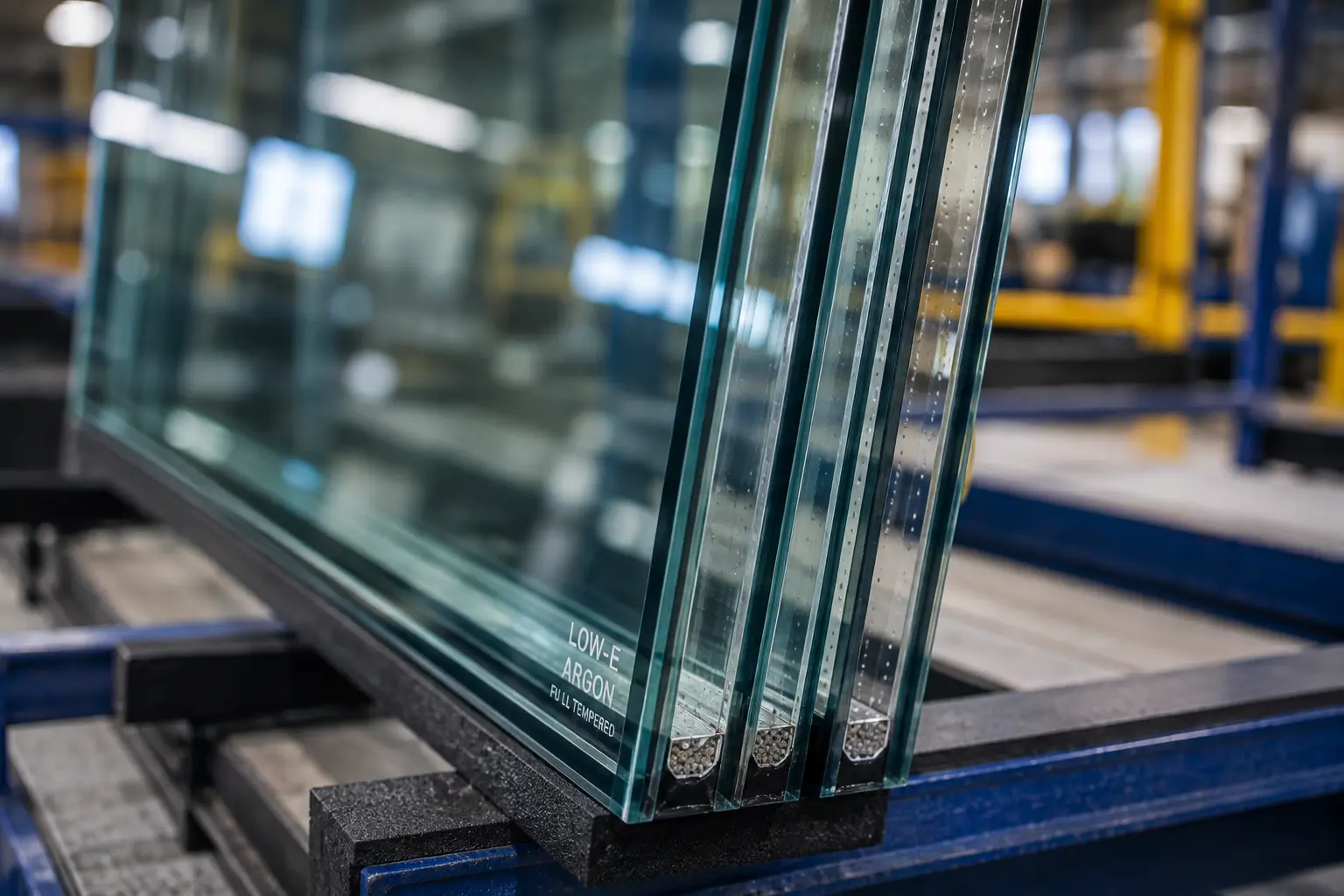
PMC Property Group has escalated its federal case against Apogee, Wausau and Viracon over spontaneously breaking windows at three Philadelphia high-rises, allegedly caused by nickel sulfide inclusions. The dispute is a live warning shot for spec writers, glaziers, and building owners who assume heat treatment alone solves NiS risk.
A Falling-Glass Story Just Became a Federal Test Case
One of the most consequential litigation stories in the architectural glass industry just got a new chapter. PMC Property Group has filed an amended complaint against Apogee Enterprises Inc. and its subsidiaries, Wausau Group and Viracon Inc., alleging the defendants sought to avoid responsibility after defective glass was installed in three high-rise residential buildings in Philadelphia.
The amended complaint was filed in the United States District Court for the Eastern District of Pennsylvania. It accuses the defendants of supplying and manufacturing defective window systems in Franklin Tower, Riverwalk Tower I, and Riverwalk Tower II in Center City Philadelphia. PMC claims windows are breaking allegedly due to nickel sulfide contamination — the classic latent defect in fully tempered soda-lime glass.
Apogee, Wausau and Viracon responded with a new motion to dismiss the amended complaint in July 2026, arguing that PMC has an ongoing Philadelphia Court of Common Pleas case against Wausau involving the same buildings, the same underlying facts, and substantially the same damages. The defendants also argued that the claims against Apogee should be dismissed for lack of personal jurisdiction and that PMC cannot pursue implied warranty claims based on spontaneous glass breakage.
Why Nickel Sulfide Inclusions Still Haunt High-Rise Specs
Nickel sulfide (NiS) inclusions are microscopic contaminants introduced during float glass manufacturing. In tempered glass, they can undergo a slow phase change that expands the inclusion enough to shatter the lite — sometimes years after installation, and always without warning. On a residential tower with balconies and pedestrian sidewalks below, one spontaneous fracture on the 28th floor becomes a life-safety event, a licensing-and-inspections violation, and a remediation project measured in millions.
The backstory here matters. According to court documents in the earlier state action, PMC paid roughly $50 million for the Wausau window packages and spent more than $750,000 removing and replacing defective glass. The Riverwalk apartments were built in 2021, and residents have reported windows falling from the towers for years. Philadelphia's Department of Licenses and Inspections previously issued a violation notice and recommended sidewalk shelters to protect passersby.
Practical Implications for the Building Industry
Whatever the courts ultimately decide on liability and jurisdiction, the case is already reshaping the risk conversation on tempered-glass procurement:
- Heat-soak testing (HST) as a baseline, not an option. EN 14179 heat-soak testing dramatically reduces — but does not eliminate — NiS-related breakage. For occupied high-rises, above-grade balconies, and pedestrian zones, specifying HST on all tempered lites is becoming the defensible minimum. Architects and glazing consultants should confirm HST parameters (holding time, temperature profile) and require lot-traceable documentation.
- Consider heat-strengthened + laminated in lieu of monolithic tempered. Heat-strengthened glass isn't susceptible to the same NiS failure mode because the internal tensile stress is lower. Pairing it with a stiff interlayer preserves post-breakage retention and has become the go-to substitution on many hospitality and multifamily jobs after high-profile fallout events.
- Contract language on latent defects. Owners and GCs should scrutinize warranty exclusions, statute-of-repose triggers, and the definition of "spontaneous breakage." The Apogee defense that implied-warranty claims can't be based on spontaneous breakage will be watched closely by every commercial glazing lawyer in the country.
- Successor liability and brand retirement. Apogee announced it was retiring the Wausau brand, and its architectural services group has consolidated under Apogee Architectural Metals. Owners with legacy Wausau window walls need to identify the current warranty counterparty in writing — before a failure, not after.
- Facade condition assessments for 2018-2022 residential towers. A generation of post-pandemic multifamily high-rises used monolithic tempered vision glass at balcony guards, spandrels, and operable units. Owners of that vintage should commission targeted facade condition assessments and pull mill certs on the installed glass, particularly if heat-soak documentation is missing.
The Bigger Signal
This is no longer a niche fabricator-vs.-developer dispute. With three towers, a federal amended complaint, and the industry's largest architectural metals platform as the defendant of record, the case is becoming the reference point that spec writers, sureties, and insurers will cite when they push back on "tempered only" glass callouts. Expect NiS risk language — and heat-soak requirements — to show up in more MasterSpec Section 08 8000 edits before year-end.