
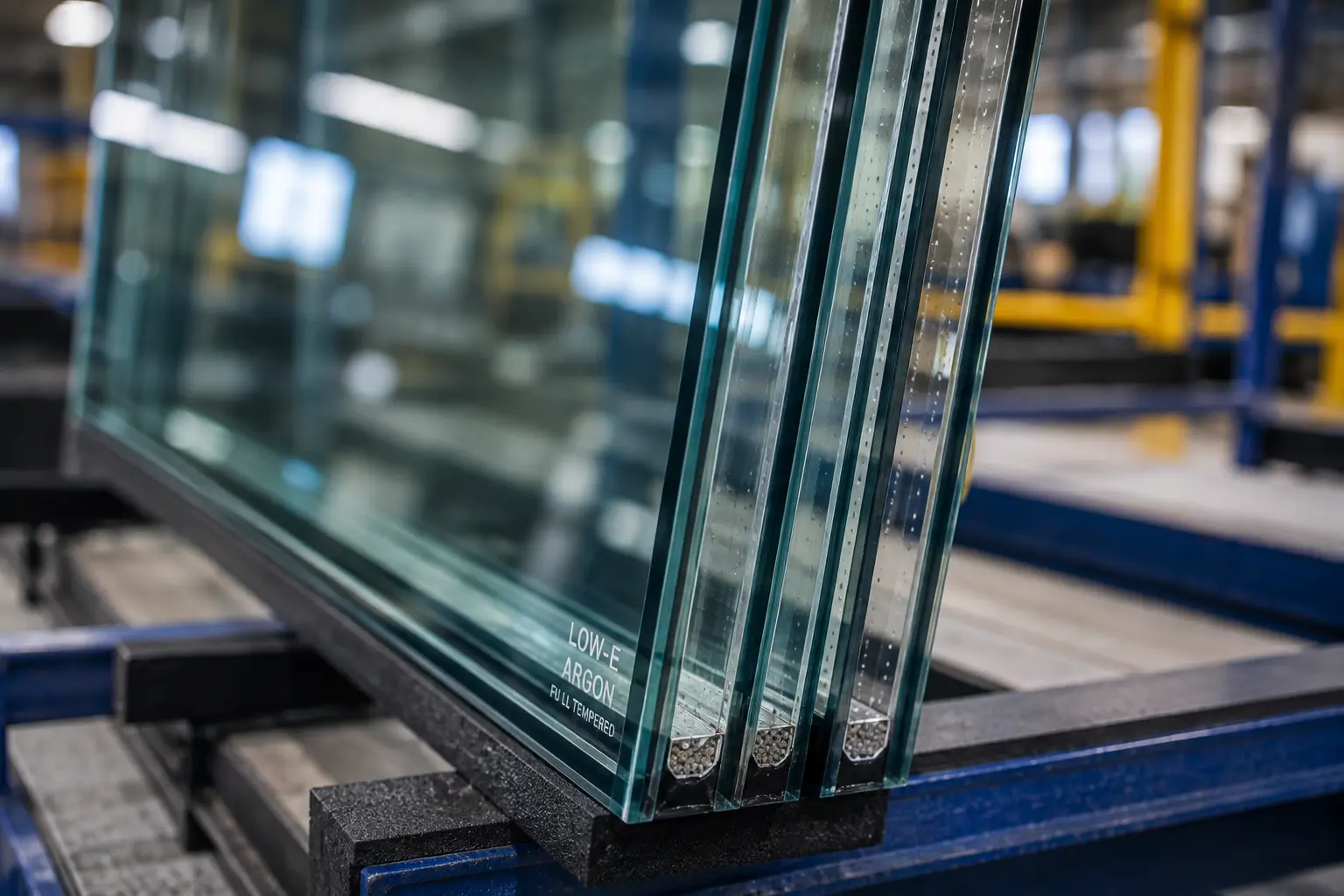
LuxWall's Enthermal Transparent Insulation has passed structural and thermal testing for use in two- and four-sided structural silicone glazing systems—removing a key barrier that had kept vacuum insulating glass out of mainstream commercial façades.
A Vacuum IGU That Plays Nicely with SSG
Vacuum insulating glass (VIG) has spent the last few years inching toward commercial relevance, but one stubborn limitation kept it boxed into retrofits, captured framing systems, and historic restoration work: compatibility with structural silicone glazing (SSG). That barrier just came down.
LuxWall announced on May 12 that its Enthermal product line is now available for use in structural silicone glazing applications, with structural and thermal testing validating compatibility with the SSG systems widely used in modern commercial façades. The company describes the validation as overcoming a challenge the industry had long considered unachievable—integrating vacuum insulation technology into contemporary window and façade systems.
For architects, glazing contractors, and curtain wall fabricators specifying for the unitized, silicone-bonded façades that dominate today's mid- and high-rise commercial work, this opens up a much broader playbook.
What the Testing Actually Covered
This wasn't a single-point qualification. The testing program evaluated Enthermal under static wind loads, point and uniform loading, compressive shear, dynamic pressure cycling, and asymmetric thermal shock conditions to confirm performance in both real-world and extreme environments.
Key results from the program:
- Wind load: Testing conducted to ASTM E330 demonstrated resistance to wind pressures exceeding 140 pounds per square foot.
- Shear strength: Large-area shear testing showed production units sustaining loads up to 2,500 pounds without shear failure, versus 600 pounds for a traditional insulating glass system.
- Hurricane simulation: Dynamic pressure testing to ASTM E1886 and E1996 simulated hurricane-force conditions up to approximately 230 mph equivalent wind speeds.
- Thermal extremes: Thermal shock testing confirmed long-term durability under uneven façade temperature exposure up to 194°F.
- System compatibility: The results confirm compatibility with both two-sided and four-sided SSG systems.
LuxWall's CTO Nathan Mellott framed the milestone as providing architects, engineers, and façade designers with confidence that Transparent Insulation can integrate into modern glazing systems without compromising structural performance.
Why SSG Compatibility Is the Unlock
Structural silicone glazing is the default attachment method for the vast majority of unitized curtain walls on commercial high-rises. The silicone bead carries wind load from the glass back to the framing, enabling the flush, minimal-sightline aesthetic specifiers and developers prize.
Until now, vacuum insulating products had a credibility problem in SSG applications. The thin, asymmetric construction of a VIG unit—with its micro-pillar array, edge seal, and significant differential thermal stress—raised legitimate questions about how the perimeter would behave under sustained silicone load and decades of thermal cycling. The shear performance gap (2,500 vs. 600 pounds) is the most significant data point in the announcement: it suggests the vacuum architecture isn't a structural weak link in the joint—it may actually be stronger than what teams are bonding today.
Practical Implications for the Building Industry
For architects and façade consultants: R-18 to R-22 center-of-glass performance in a profile thinner than a double-pane IGU is now viable for new-construction unitized curtain wall, not just glass-only retrofits. That changes the math on window-to-wall ratio decisions in jurisdictions tightening prescriptive envelope U-factors—New York City, Boston, Seattle, Washington State, California Title 24, and the growing list of cities adopting stretch codes.
For glazing contractors and fabricators: SSG compatibility means VIG can be designed into shop-assembled, unitized panels rather than requiring captured systems or field-glazed pressure plates. That preserves the productivity advantages of unitized construction while delivering a step-change in thermal performance.
For curtain wall system manufacturers: Expect specification pressure to integrate VIG-compatible glazing pockets and pressure equalization details into standard SSG product offerings. The Enthermal Plus variant already fits into standard 25 mm (1-inch) IGU framing systems without engineering redesign or factory retooling—lowering the adoption barrier for system houses.
For owners with Local Law 97, BERDO, or similar performance mandates: A glazing technology that combines retrofit-grade payback with new-construction-grade structural acceptance widens the toolkit for hitting carbon caps without sacrificing the glass-forward design language tenants expect.
The Bigger Picture
The SSG validation is a maturation signal for the entire VIG category. Vacuum technology has been positioned as the eventual successor to double-pane for cold and mixed climates, but commercial adoption has hinged on overcoming exactly these kinds of integration questions. With unitized SSG now in scope, the conversation shifts from "can we use it?" to "where does it pencil out first?" Expect early production specs on data centers, Class A office repositioning projects, and code-leading municipal work where envelope U-factor compliance is the binding constraint.