
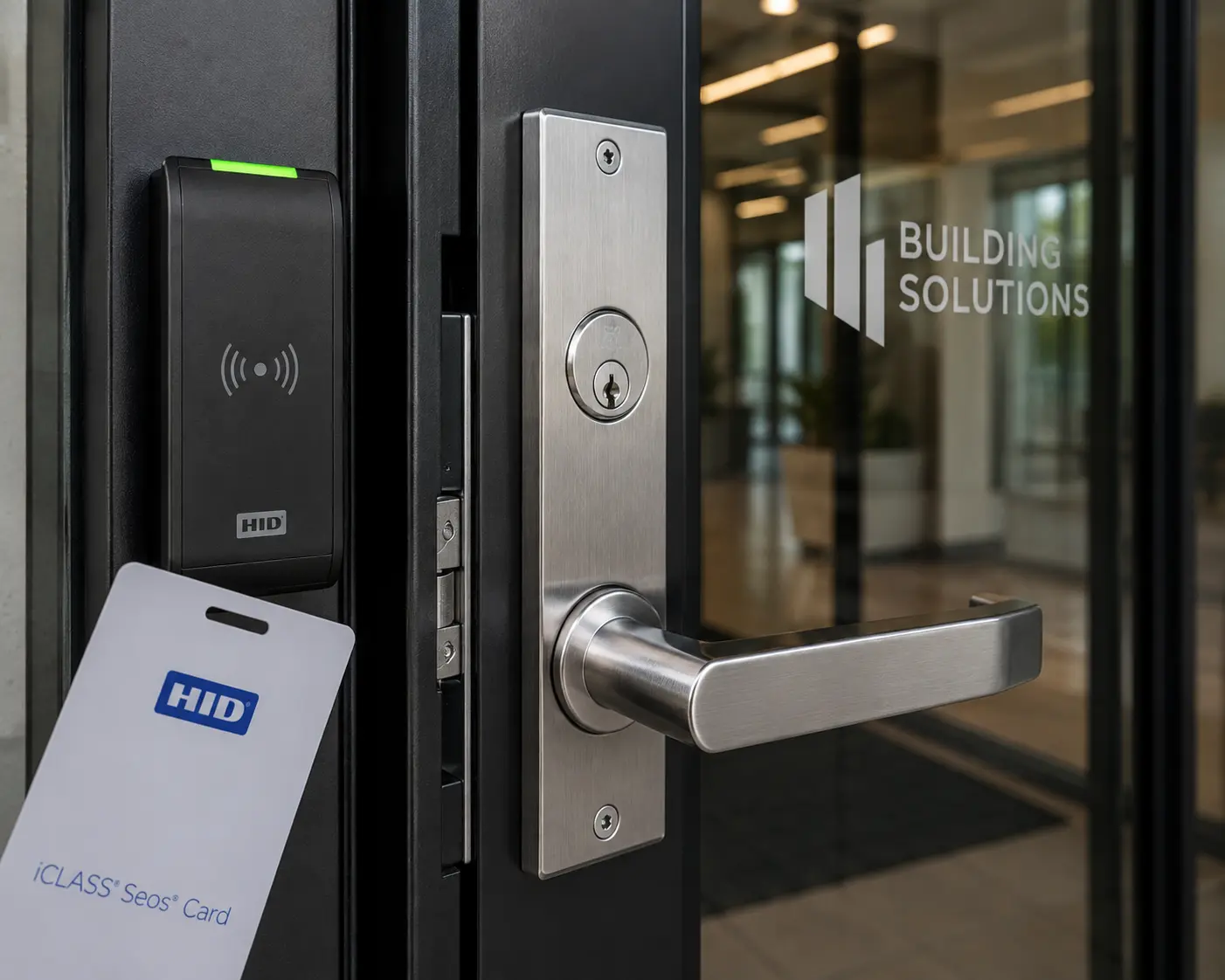
dormakaba's August 14 acquisition of two Newport Beach access control specialists signals a strategic shift from bundled engineered solutions toward open-component sales to OEMs and software partners. Here's what specifiers, integrators, and door hardware manufacturers need to know.
A Quiet Deal With Loud Implications for the Opening
dormakaba, one of the largest global suppliers of door hardware and access solutions, has expanded its US access control footprint through a two-target acquisition that closed August 14, 2026. The Swiss group picked up the operating businesses of Azure Access Technology and ADME, Inc.—the latter doing business as Apollo Security—both based in Newport Beach, California.
The two companies are small on paper. Together, Azure Access and Apollo Security employ around 30 people and serve access control customers worldwide. But the strategic logic behind the deal is what matters for the fenestration and door hardware supply chain.
From Bundled Systems to Open Components
The most consequential part of the announcement isn't the price (undisclosed) or the headcount. It's dormakaba CEO Till Reuter's framing of the deal as a pivot away from the company's historical business model. Reuter said that dormakaba has historically offered engineered solutions as a bundle, and that going forward the company will strengthen its open component portfolio—locks, readers, and controllers—sold to OEM partners.
That's a meaningful shift. dormakaba is best known for delivering complete access solutions: closer, lock, credential, and reader specified together and installed as a system. The Azure Access acquisition specifically targets an open-architecture controller platform designed for original equipment manufacturers and software providers, engineered for flexible integration and customization.
In practical terms, dormakaba is signaling that it wants to sell components into other companies' access control ecosystems—including competitors and independent software vendors—rather than only selling turnkey packages.
Why This Matters for Commercial Building Specs
Access control is where the door opening meets the smart building. For architects and specifiers writing hardware sets on commercial projects, the deal has several near-term implications:
- Broader OEM interoperability. Azure Access empowers software organizations to deploy their own controller panels and accessories, which means dormakaba locks and readers are more likely to appear inside third-party access management platforms without proprietary lock-in.
- Apollo Security's installed base becomes a migration path. Apollo brings a substantial installed base of access control and integrated security systems. Retrofit and modernization specs on institutional and commercial buildings can now be routed through a dormakaba-owned upgrade path rather than a competing vendor.
- Faster time-to-market for connected hardware. According to dormakaba, Azure Access's open, adaptable platform is intended to help partners bring access control solutions to market more quickly and efficiently—relevant for GCs and owners trying to hit substantial completion dates on projects with evolving cybersecurity and credential requirements.
The Bigger Industry Signal
Deal-tracking commentary framed the transaction as a signal about where the access control market is heading. Independent analysts noted that the acquisition points to consolidation in electronic access control, where hardware makers are courting OEM and software partners rather than selling closed, bundled systems. The read: flexible, integratable components—not proprietary packages—are increasingly where the market is heading.
That aligns with a broader trend across the building envelope. Owners and facility managers are demanding hardware that speaks to multiple platforms—building management systems, visitor management, identity providers, and cybersecurity monitoring tools—without requiring a rip-and-replace of adjacent systems.
Investors reacted cautiously. dormakaba stock traded around CHF 58.75 at the close of the August 17 session as the market weighed the strategic implications of the deal. The acquisitions are intended to broaden dormakaba's offering in integrated access control and security systems, adding software and hardware capabilities that can be leveraged across commercial and institutional customers in the United States.
What to Watch Next
For spec writers and division 08 estimators, three items belong on the watch list:
- Product line integration. How quickly does dormakaba fold Azure Access controllers and Apollo Security systems into its published spec templates and BIM content libraries?
- OEM partnerships. Which access management software vendors publicly announce interoperability with the expanded dormakaba component set?
- Component pricing versus bundled pricing. If dormakaba begins selling controllers, readers, and locks separately at competitive prices, expect downstream pressure on incumbent access control OEMs that have relied on proprietary hardware margins.
The headline is straightforward: a 30-person California operation just became the tip of the spear for dormakaba's US components strategy. For the fenestration industry, it's another data point in the ongoing merger of the door opening with the digital perimeter of the building.