Crystal Window & Door Systems just launched an aluminum outswing projected window line engineered to beat New York City's stringent envelope thresholds—with U-values down to 0.18, AW-PG100 structural ratings, and a polyamide thermal break. Here's what specifiers need to know.
A new commercial window line built for stretch codes
Crystal Window & Door Systems has expanded its commercial portfolio with the Series 8700, an aluminum outswing projected window line that the company says is explicitly engineered to clear the latest energy thresholds in New York City and other code-leading jurisdictions. The product news, published June 8, 2026, lands at a moment when spec writers in the Northeast are scrambling to identify operable windows that can actually meet the tightening prescriptive U-factor limits in commercial envelopes.
Crystal positioned the launch around three pillars: thermal performance, structural performance, and a domestic supply chain. The Series 8700 is available in casement, awning, and fixed styles, with a 3-¼-inch jamb depth that suits both new construction and replacement work in mid-rise, high-rise, multi-family, office, hospitality, and institutional buildings.
The performance numbers spec writers care about
The headline data points for Division 08 specifiers:
- U-factor as low as 0.18 for the fixed style and 0.29 for operable styles with appropriate IG packages—values the company says surpass NYC and other municipal and state energy code requirements
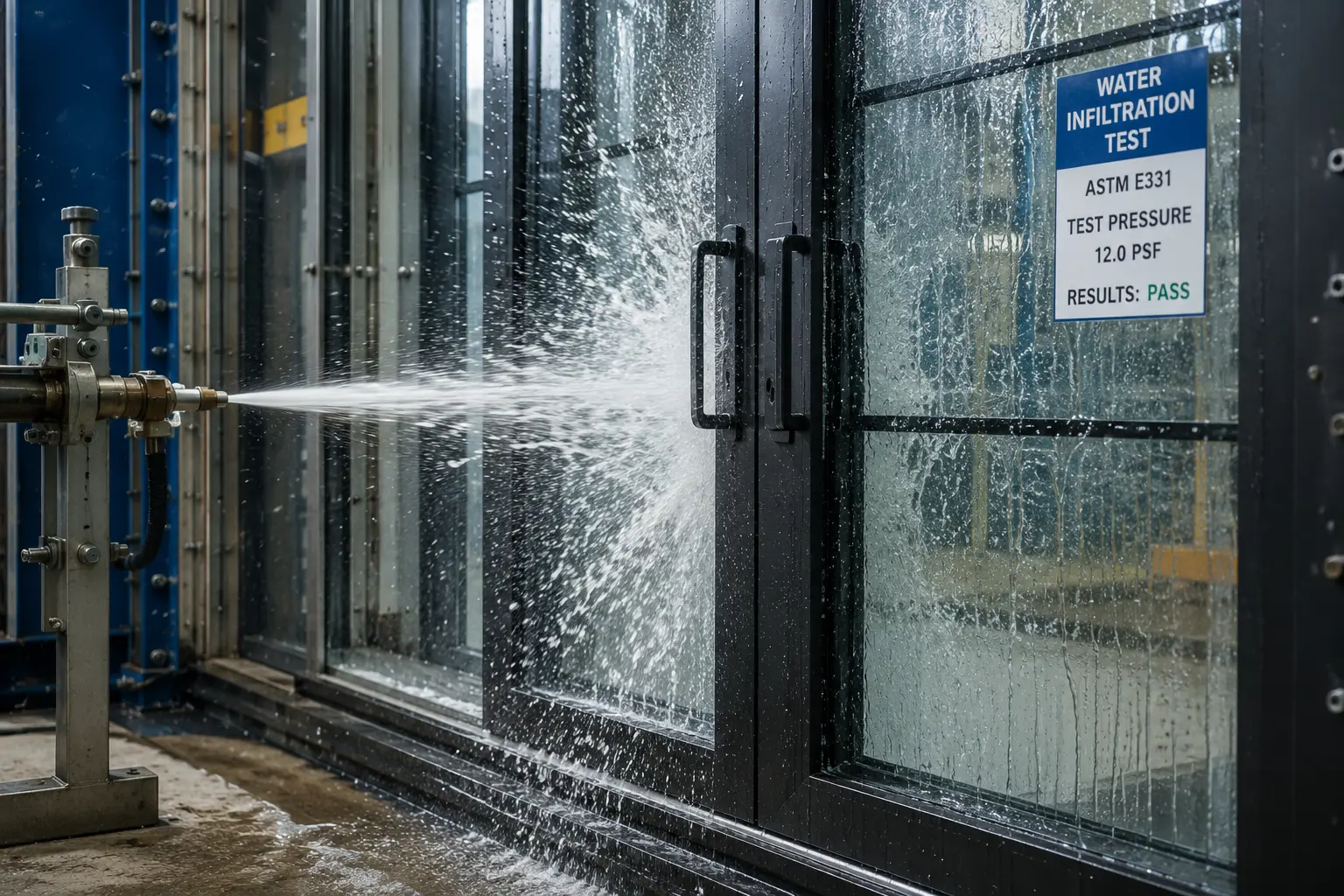
- AW-PG100 structural rating for the outswing casement and fixed configurations; AW-PG85 for the awning
- STC 42 / OITC 34 acoustic ratings available with laminated glass options
- Standard 1-inch double IGU, with optional 1-¼-inch IGU, triple glass, monolithic, and bird-deterring glass
- Polyamide strut thermal break, which also enables two-tone interior/exterior color schemes
- Sightlines of 2 inches for fixed units and 2-15/16 inches for operable, maximizing daylighting
For context, AW-PG100 is the top of the AAMA/WDMA/CSA 101 Architectural performance class—territory typically reserved for the most demanding high-rise applications. Pairing that with a 0.18 fixed U-factor on an aluminum frame is the practical play here: it gives architects an operable-compatible system that doesn't force the design team into a thermally-broken steel or fiberglass alternative to hit the number.
Why this matters for NYC and stretch-code projects
New York City's energy code, along with Local Law 97 retrofit pressure on existing office stock, has pushed envelope U-factor thresholds into territory that older aluminum window lines simply can't reach without triple glazing or oversized frames. Boston, Seattle, Washington State, and several other jurisdictions are on similar trajectories under the 2024 IECC and ASHRAE 90.1-2022 trajectories.
The Series 8700's pathway to compliance is notable because it doesn't require a depth penalty: 3-¼ inches of jamb depth is conventional for a commercial projected window, which keeps rough opening details, perimeter flashing, and interior trim coordination familiar for glaziers and GCs. Crystal also offers a triple-glass option for projects that need to push U-factors even lower for Passive House or stretch-code targets.
Finishes, customization, and the Buy American angle
The Series 8700 ships in standard and custom sustainable powder coat finishes meeting AAMA 2604 (standard) or AAMA 2605 (upgrade) criteria—relevant because FGIA recently updated those finishes documents, and AAMA 2605 is increasingly being specified for high-rise and coastal applications where chalk and fade resistance matter. The polyamide thermal break supports specifying different interior and exterior colors without compromising thermal performance, a frequent ask on adaptive reuse and historic-context projects.
Functionality options include opening limit devices, ADA-compliant hardware, between-the-glass grids, and a simulated divided light grid option Crystal says is coming soon—useful for institutional and hospitality projects that need life safety controls or historic visual cues.
Crystal also leaned into the domestic manufacturing story, emphasizing American-made materials and labor. With Section 232 aluminum tariff uncertainty still rippling through extrusion pricing, a domestically sourced aluminum window line gives GCs and owners a degree of insulation from import-driven cost volatility on long-lead projects.
Practical takeaways
- Architects: The Series 8700 gives you an AW-rated outswing operable that can hit aggressive U-factor targets without triple glazing in many climate zones—worth modeling against your current basis-of-design.
- GCs and glaziers: The 3-¼-inch jamb depth keeps perimeter details conventional; expect the IGU upgrades and AAMA 2605 finish to drive the cost delta.
- Owners and developers: For NYC and other stretch-code markets, having a domestically manufactured AW-PG100 window in the basis of design reduces tariff exposure and helps de-risk the energy compliance path.